Today, strange as it feels to write it, is the anniversary of my first book’s publication! The day I officially became an author. And the year that followed has taught me any number of things about myself as a writer: Could I adhere to a deadline? (Yes.) Could I become a social media/promotion whiz? (The jury’s still out on that, but I think I’ve improved!) Did I have a thick enough skin to stand up to negative reviews? (Could probably be thicker, but I’m working on it.) Do I have the discipline and determination to keep doing this? (Apparently so. I’m still here, and I just passed the 50-page mark on my new WIP. Loving the story and characters too, which is even better.) And for all the angst and agita involved, I wouldn’t trade the experience of seeing my work published for anything.
What the next year holds has yet to be discovered. But I’m looking forward to finding out! In the meantime, to commemorate the occasion, I’m giving away a copy of both of my books this week to one commenter. And thanks to all of you who have taken the time to read my work!
Do you have an official or unofficial anniversary that you enjoy observing?
According to T. S. Eliot, “the naming of cats is a difficult matter.” The naming of fictional characters can be every bit as challenging, especially when you’re restricted to a certain time, place, and culture.
In modern/contemporary romance, you have pretty much a free hand to name your characters whatever you want. After all, this is a world in which Dweezil and Moon Unit Zappa are actual people. And I’ve read romances featuring heroines with names like Rainbow or Moonflower, completely without irony on the author’s part. (And usually, it is the heroine, rather than the hero, who ends up saddled with the outlandish moniker.)
Historical writers have somewhat fewer options–especially if they want to sound reasonably authentic. An anachronistic name–like Heather, Brittany, Amber, or Skye–can pull a reader right out of your Regency- or Victorian-set romance. Personally, I did a double take when Georgette Heyer inflicted bratty ingenue Tiffany Wield on us in The Nonesuch, even though she explained that Tiffany was actually a diminutive for the more historically accurate Theophania. And the further back in time that you set your novel, the more careful you have to be about names.
So, what are some resources to ensure a period-appropriate name? Well, Biblical and saints’ names are fairly safe unless you’re setting your story in the pre-Christian age. You can find John, Mary, and all their variants throughout history. Names from Classical history and myth were also popular, especially from the Neo-Classical period onward. The Georgian and Regency periods boasted plenty of Julias, Dianas, and Sophias, along with their Janes, Marys, and Elizas. And if you’re a stickler for historical authenticity, you can check population censuses for your chosen time period and setting and see for yourself which names recur most frequently. This is also a good way to generate a list of surnames, which I find particularly useful!
Statue of Llewelyn the Great
For a more fanciful touch, you can turn to popular literature. Rosalind, Viola, and Miranda from Shakespeare. Lancelot, Tristan, Guinevere, and Isolde from Arthurian legend. Deanna Raybourn’s eccentric March family in her Lady Julia mysteries all have Shakespearean first names. And several members of Mary Balogh’s Bedwyn clan have names derived from the old romances their mother apparently loved.
I myself often turn to poetry, music, and history itself for inspiration. The heroine of my first book, Waltz with a Stranger, is named Aurelia–a popular 19th century name with classical connotations. But it was the Civil War era love song “Aura Lea” that first recalled that name to me. And one of my WsIP features a Welsh hero named Llewelyn, after Llewelyn the Great, Prince of North Wales. (By the way, Llewelyn was a highly popular Welsh boys’ name during the Victorian era, along with Arthur, Evan, Huw, and Rhys.)
Angharad Rees as Demelza in the Poldark miniseries
Sometimes the most mundane objects can provide unexpected inspiration when it comes to names. Winston Graham, author of the Poldark Saga, once wrote about finding the perfect name for his heroine on a country signpost, deep in the heart of Cornwall: Demelza. And from that moment, Graham asserts, the image of his heroine became crystal-clear in his mind, and remained so throughout his many years of writing her. Following Graham’s example, I scrutinized several local street signs and found a handful that served quite well as historical surnames–Barrington, Tiverton, and Ashby–even if none has yielded as indelible a character as Graham’s Demelza Carne Poldark.
What are some of the unusual names you’ve encountered as a reader or dreamed up as a writer?
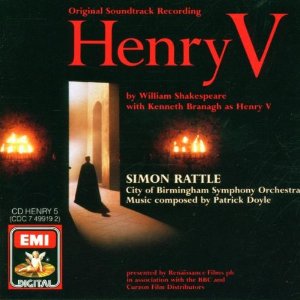
Not too surprisingly, the subject of music arose frequently during my October blog tour. On at least two stops, commenters were asked to share their favorite kinds of music or, alternatively, their favorite soundtrack. Stopping by to chat and give my own answers (traditional Celtic, classic rock, Patrick Doyle’s Henry V), I theorized that many books had their own “soundtrack,” whether that means music the author played to get her in the mood to write or music that the author associates with the characters and situations in her book.
As music figures heavily in A Song at Twilight, I thought I’d share the “soundtrack” for the book, along with a little background information about each song. These are probably the most important musical numbers in the book, and they’re quite an eclectic bunch, ranging from traditional carols/folk songs to classical opera to Victorian parlor ballads.
1. Tomorrow Shall Be My Dancing Day: Traditional English carol, sometimes ascribed to the Cornish. The central theme is Christ narrating his own life cycle as movements in a dance. The carol goes on at length from Birth to Crucifixion to Resurrection, but usually only the first verses are sung.
2. Music for a While: Written in 1692 by Henry Purcell, a gifted English Baroque composer who’s not as well-known as he could be, owing to his untimely death at 35 or 36. This song–about the soothing power of music–was composed as incidental music to a play, Oedipus, and sung by the character of Tiresias, the blind Greek soothsayer.
3. Voi che sapete: One of Cherubino’s arias from Mozart’s The Marriage of Figaro. In the opera, the lovelorn page performs this song for his patroness, Countess Rosina, and entreats plaintively of the ladies he serves, “Tell me what love is.” Cherubino, a trousers role, has been famously portrayed by Frederica von Stade and Cecilia Bartolli. I enjoyed adding my heroine, Sophie, to their number!
A playful moment between Susanna (Hagley) and Figaro (Gerald Finley)
4. Deh vieni, non tardar (Oh, come, do not delay): Also from The Marriage of Figaro, but sung by Susanna, Figaro’s bride. It’s often staged as a love song sincerely meant for one man (Figaro) but also intended to entrap/deceive another (the lecherous Count Almaviva). Sophie’s interpretation of the song was influenced by Alison Hagley’s performance in the 1994 Glyndebourne production of The Marriage of Figaro.
5. The Mermaid’s Song: A lyric poem by Anne Hunter (1742-1821) was set to music by Joseph Haydn (1732-1809) to make this very lovely canzonetta. Hunter and Haydn became good friends and enjoyed a fruitful musical collaboration.
6. I Dreamt I Dwelt in Marble Halls: An aria from The Bohemian Girl (1843), an opera composed by Michael William Balfe, in which the heroine, kidnapped and given to the gypsies as an infant, confides to her lover the dreams she has had of her noble upbringing. The song on its own enjoyed great popularity during the 19th century, but I first heard it as an airy, ethereal track on Enya’s Shepherd Moons.
7. The Lost Chord: Composed in 1877 by Arthur Sullivan (of Gilbert and Sullivan), who had tried for several years to set Adelaide Anne Procter’s poem “A Lost Chord” to music. He found tragic inspiration in the last illness of his brother Fred, who died five days after the song was completed. Although not written for sale, The Lost Chord became an huge commercial success in Britain and America during the 1870s and 1880s. In Topsy-Turvy, the 1999 filmabout Gilbert and Sullivan’s stormy partnership, Sullivan’s longtime mistress Fanny Ronalds (Eleanor David) performs “The Lost Chord” at a society function.
8. Love’s Old Sweet Song: An Irish folk song, written in 1884, with music by James Lynam Molloy and lyrics by G. Clifton Bingham. Very popular with Victorian audiences, the song has been recorded by many artists. The title of my book is actually taken from a line of the chorus: “Just a song at twilight, when the lights are low.”
As I observed, the selection is nothing if not eclectic! But I enjoyed picking out each song, and hope that its inclusion enhanced the mood and the readers’ experience!
So, dear reader, do you have a favorite opera/composer or a soundtrack that you associate with a favorite book? And writers, do you find yourself imagining or even arranging a soundtrack for your works in progress?
I will be giving away a signed copy of A Song at Twilight to one commenter on this week’s post, until midnight, PST, 11/10.
This week’s Spotlight is on Mia Marlowe, author of Scottish-themed historicals for Kensington, whom I had the pleasure of meeting at RWA 2012 in Anaheim, and again at RWA 2013 in Atlanta. Welcome to Blue Stockings & Crossed Genres, Mia!
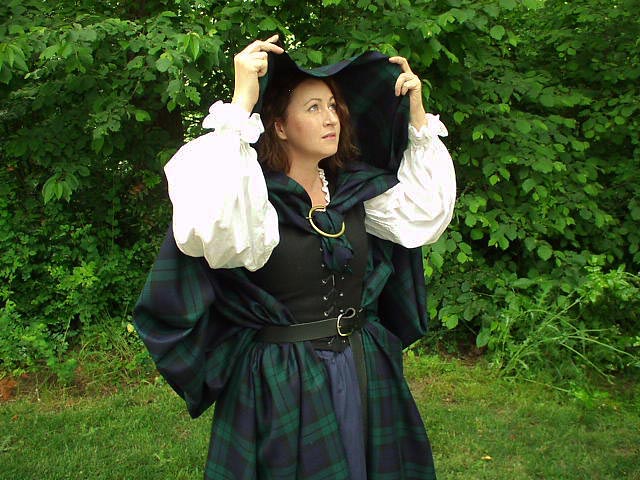
Thanks for having me here today, Pamela. Since you’re blogging about Victorian fashions on my blog, I’ll be sharing about Scottish clothing here. Obviously, everyone’s thoughts run to kilts whenever Scotland is mentioned and it does have a storied past. But before we get to kilts, we need to have (pardon me, pun haters everywhere) . . . a good foundation!
For men and women, the universal undergarment was the leine (pronounced “LAY-nuh”) or shirt. Made of linen, it was a chemise-like, sleeved garment that came to the knees. Over this, woolen fabric was draped to form kilts or arisaids.
A belted plaid, or Great Kilt, is actually just a large rectangle of fabric 50 to 60 inches wide and 4 or 5 yards long. The wearer had to pleat it and strap a belt around himself to hold it up while draping the excess over his shoulder. This versatile garment also doubled as a blanket to wrap up in at night if a man was living rough in the Highlands.
An arisaid is the feminine version of a Great Kilt. The fabric is folded over a rope belt and then can be worn with both halves of the material forming the skirt or the top part can be used as a sort of built-in shawl.
The practice of associating a certain tartan with a specific clan is a Regency era development. Wearing a kilt had been prohibited after the disastrous Jacobite uprising of 1745 and was forbidden under pain of seven years’ transportation for a second offense. The Highland Dress Act was repealed in 1782, but kilts didn’t really come into their own again until an English king came calling. (In Plaid Tidings, my hero Alexander is part of the advance guard charged with making sure Scotland will be safe for his sovereign!) When Sir Walter Raleigh arranged for King George IV to make his visit to Scotland in 1822, he assigned certain weaves to each of the clans. English nobles scrambled to come up with a Scottish connection so they could join the king in full Highland regalia. The result of the royal progression to Scotland was a renewed sense of nationalistic pride and a resurgence of Highland dress and traditions.
Ω
And now, I believe Pamela has some questions for me:
1. Since the heroine of my new historical, A Song at Twilight, is a professional singer, I was intrigued to discover that you are a classically trained soprano yourself. Would you share a little about your time as an opera singer?
Mia:My undergrad degree is in Music. After winning the District Metropolitan Opera competition, I made my debut with the Denver Symphony and sang with a number of regional opera companies. It was glorious and invigorating and I loved singing, but it required me to leave my small children and DH for increasingly longer periods of time. When I was offered the opportunity to spend 8 weeks in Germany with a repertory company, that was the tipping point. At that level, music is a demanding god. No one can have it all. I will never regret not laying my family on the altar of my career.
2. Do you have a favorite opera and/or a favorite role (one you played or aspired to play or wish you’d played)?
Mia: I played a lot of different roles. I know what it’s like to cough my life away in a freezing Parisian garret (Mimi from La Boheme). I got a chance to create the role of Mariane in the regional premier of Kirk Meecham’s Tartuffe with the composer in the audience, which was both scary and gratifying. I’ve worn a corset and bumroll and sweated bullets over an aria that turns coloraturas’ bowels to water (“Come Scoglio” from Mozart’s Cosi Fan Tutte). I even did a pants role (a male part written to be played by a woman) when I was in college (Cherubino from The Marriage of Figaro). That was great fun. But I have to say the role I enjoyed most was Rosalinde from Die Fledermaus by Strauss. Not only is the music divine, she is the smartest person on the stage, outwitting her straying husband by seducing him at a masked ball and earning her own HEA!
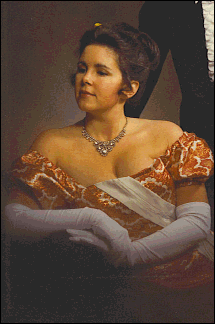
Mia as Rosalinde
3. How long have you been fascinated with Scotland, and have you ever visited it? If so, what is your favorite/keenest memory of the place?
Mia: When I signed a new contract with Kensington for more Scottish stories, my DH suggested it might help if we actually visited Scotland. We went last June. For 12 glorious days, we cruised around the UK. I really enjoyed the stop at Kirkwall on one of the Orkney islands. But my favorite spot was the ruins of Urquhart Castle on the shores of Loch Ness. No, we didn’t see Nessie, but it’s not hard to imagine something large and otherworldly beneath the surface of those dark waters.
4. What are your hero and heroine’s strongest/weakest traits, and what makes them the perfect match?
Mia: Alexander is a reluctant hero at first. He wants nothing to do with the Scottish side of his nature since his Scottish mother left him when he was very young. However, when he wins the Bonniebroch barony in a hand of cards, a betrothal comes with it—to a very determined Scottish miss. Lucinda helps him learn to forgive and find the strength to complete the three tasks which will lift a terrible curse from the old Scottish castle and all its residents.
5. Was it something specific or general that spurred you into writing, and which authors were the biggest influence on you as a writer?
Mia:I met a romance writer and realized writers weren’t the ivory tower sorts I’d always imagined them to be. She was just like me. So I reasoned if she could do it, I could too. The Greeks have a word for this. It’s called “hubris.” I had an ocean of things to learn before my first manuscript was published.
6. You’ve tried your hand at many things in life. What is one thing you haven’t tried yet that you would like to try?
Mia:I’d like to run away with my DH and be a full time world traveler—at least for a while. It’s been a dream of mine to circumnavigate the globe and hit all seven continents. Different countries and cultures fascinate me. Of course, I’d miss my family and my dogs (and my own bed) after a while! At that point, I could always settle in for some armchair travel with some great books!
Ω
BIO
MIA MARLOWE is a rising star whose Touch of a Rogue was named one of Publishers Weekly’s Top Ten Best Romances for Spring 2012. Mia learned about story-telling while singing professional opera. She knows what it’s like to sing a high “C” in a corset, so she empathizes with the trials of her historical heroines. Mia resides in Boston, Massachusetts. For more, visit www.miamarlowe.com & connect with Mia on Twitter and Facebook.
Ω
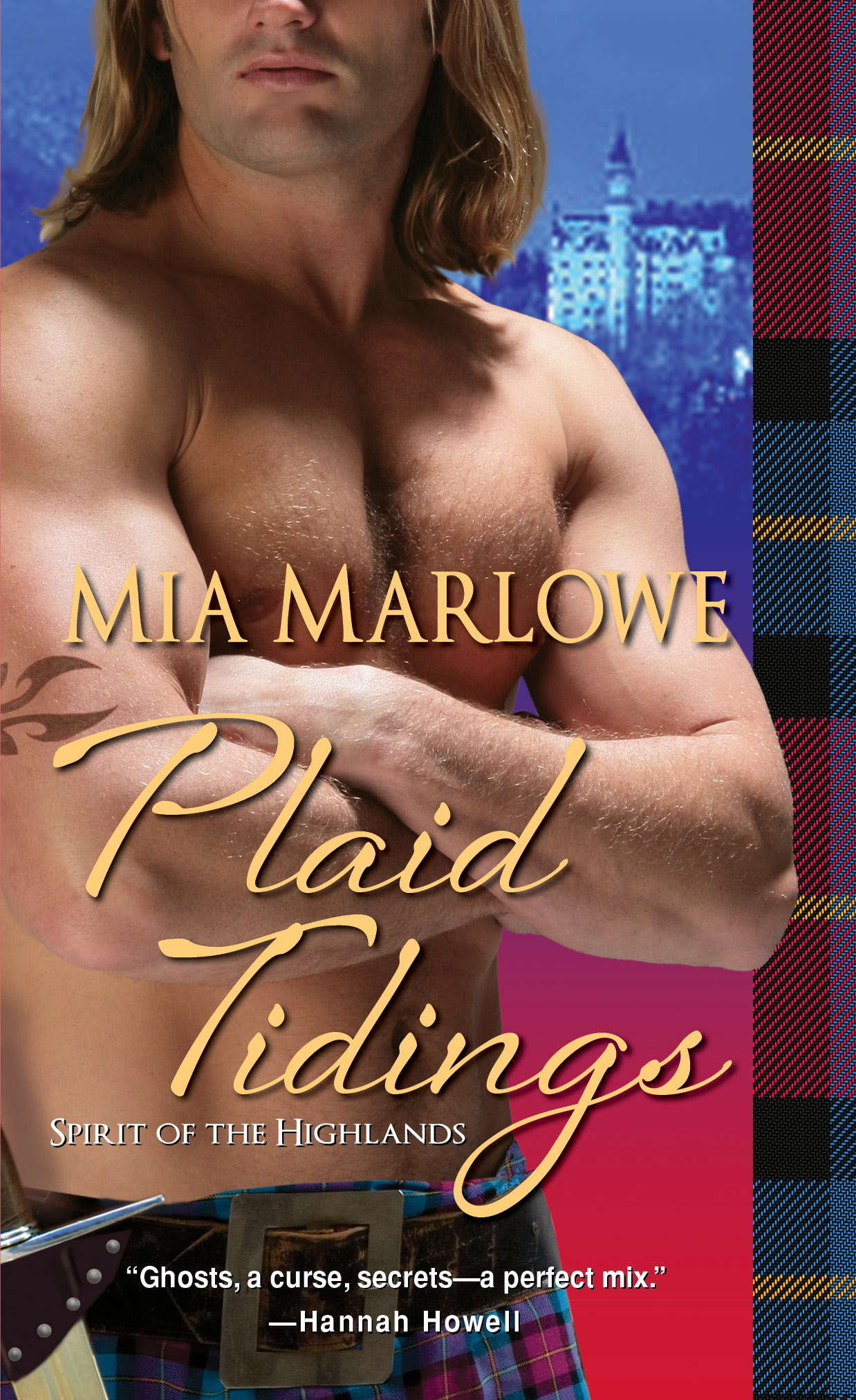
Plaid Tidings
Christmas in the Highlands…
Not any dashing English lord’s idea of a good time. But now that Lord Alexander Mallory has won a Scottish estate in a hand of cards, he is the unlikely laird of wild, snowy Bonniebroch. Worse yet, the ancient pile of stones comes with a betrothal. To a fiery red-headed virgin. And a curse. Alex will have his hands full honoring the first, seducing the second and breaking the third … all by Twelfth Night.
Mia will give away a print edition of Plaid Tidings to a lucky commenter. To enter, leave a comment or question for her. Or answer a question of your own: Famous or not, living or dead, who do you most want to see in a kilt?
ETA: Michelle Fidler wins the giveaway of Plaid Tidings! Please contact Mia with your mailing address, so she can get your prize off to you. And thanks for stopping by!
And catslady wins the giveaway of A Song at Twilight over on Mia’s blog. Please contact me with your mailing address, so I can send you the book. Thanks for participating!
The last couple of weeks have been chock-full of stuff. So much stuff that I never got around to blogging last weekend. So, while I still have some “little grey cells” to devote to the task, here’s a five-point bulletin on what’s been happening lately.
1. There is no book that’s so wonderful that someone out there won’t hate it. And there’s no book that’s so awful that someone out there won’t love it. That being said, I have been surprised, pleased, and touched by the response A Song at Twilight has received so far. Heartfelt thanks to all of you who enjoyed the book and took the time to post reviews on Amazon, B&N, Goodreads, and elsewhere. A new book by a comparatively new author needs all the support it can get!
One especially pleasant surprise was this starred review from Library Journal (I knew it was positive, but I didn’t know about the star until I received a tweet about it, and yes, I’m going to indulge myself a little by quoting it):
Library Journal
★ 10/15/2013 “Devastated when Robin Pendarvis’s past wrenches him from her life and crushes her romantic dreams, silver-voiced Sophie Tresilian gives up on love and immerses herself in her music. Now, four years later with her star on the rise, Sophie almost has it all—until Robin walks into one of her London performances and turns her world upside down. The past alternates with the present as tantalizing flashbacks bring fans up to speed in a compelling, deeply complex romance that becomes more tangled as it progresses. A self-possessed heroine and a hero determined to make things right prevail against formidable odds in this engaging story that is enhanced by an abundance of family and friends (some introduced in Waltz with a Stranger) and leaves room for the stories that are sure to come. VERDICT Moving, lyrically written, and superbly inventive, this late Victorian tale has a dash of mystery and more than one startling plot twist to put a refreshing spin on the typical tender reunion story. A delightful way to spend an afternoon.”
It’s always such a lift when a reviewer “gets” your work–and the fact that she avoided giving away major plot spoilers while reviewing is another bonus! 🙂
Of course, the funniest response I’ve received has come from the 10-year-old son of my Queen Beta Reader, who wanted to know “why Auntie Pam’s books all have a guy showing his chest on the cover?” Out of the mouths of babes . . .
2. Much to my surprise, an article I wrote almost a year ago–around the time Waltz with a Stranger came out–ended up being tweeted and re-tweeted all over the Twittersphere last week. I’m startled but flattered by this occurrence, and if the advice I offered helps other writers, then that’s surely all to the good. But I guess it goes to show that nothing posted on the internet ever really dies!
3. With Halloween fast approaching and Thanksgiving following close on its heels, I’m bracing myself for the onslaught of holiday music–good, bad, and indifferent. But I’ve found one palliative already in Connie Dover’s Christmas CD “The Holly and the Ivy.” I discovered Dover when I was in graduate school. She doesn’t tour much or have many recordings to her name, but her voice is exquisite: light, clear, and supple rather than ethereal. Not that I mind ethereal voices, but it’s refreshing to hear a non-breathy trad singer. Dover does a lovely job with most of the holiday standards on the CD, but I can already tell that “The Huron Carol” is going to be a favorite. It’s an unusual song written by a French Jesuit priest in Canada for the Huron Indians, retelling the Nativity story in their cultural terms. Dover sings in French and English here, flawlessly. So, if you’re looking for a Christmas album that’s traditional but also pushes the envelope a little, I recommend this one!
4. Various houses in my neighborhood have been going all out for Halloween. So I’ve been regularly taking pictures on my walks of what I see. Offerings range from the grisly (hanging skeletons, a front lawn strewn with fake body parts–which I’m not including here!). . .
. . . to the elaborate (an ever-expanding haunted mansion, a pirate-themed house) . . .. . . to the let’s-not-scare-the-kiddies (Mickey & Minnie, sittin’ in a tree).
Most of the decorations are quite clever, although I personally think the graveyard motif is a bit overused this year, along with giant spiders in their cotton batting webs.
5. The Spotlight column returns on Monday, 10/28, with special guest Mia Marlowe, author of Scottish-themed historical romances. Mia and I will actually be doing a blog swap that day, guesting on each other’s sites to promote our new releases. And we’ll each be giving away a copy of Plaid Tidings and A Song at Twilight, respectively. So look for us on Monday. Mia will be here, at Blue Stockings & Crossed Genres, while I’ll be over at her place. Hope to see you there!
In addition to the blog swap giveaway with Mia, I’m holding my usual giveaway this weekend: a copy of A Song at Twilight to one commenter. Post about anything you like, whether book-, Halloween-, or life-related, until midnight PST, 11/3!
ETA: Michelle Fidler wins this week’s giveaway of A Song at Twilight! Please contact me with your mailing address so I can send you your book!

 Today, strange as it feels to write it, is the anniversary of my first book’s publication! The day I officially became an author. And the year that followed has taught me any number of things about myself as a writer: Could I adhere to a deadline? (Yes.) Could I become a social media/promotion whiz? (The jury’s still out on that, but I think I’ve improved!) Did I have a thick enough skin to stand up to negative reviews? (Could probably be thicker, but I’m working on it.) Do I have the discipline and determination to keep doing this? (Apparently so. I’m still here, and I just passed the 50-page mark on my new WIP. Loving the story and characters too, which is even better.) And for all the angst and agita involved, I wouldn’t trade the experience of seeing my work published for anything.
 What the next year holds has yet to be discovered. But I’m looking forward to finding out! In the meantime, to commemorate the occasion, I’m giving away a copy of both of my books this week to one commenter. And thanks to all of you who have taken the time to read my work!









![P10-24-13_08.38[1]](https://pamelasherwood.com/wp-content/uploads/2013/10/p10-24-13_08-381.jpg?w=300&h=225) . . . to the let’s-not-scare-the-kiddies (Mickey & Minnie, sittin’ in a tree).
. . . to the let’s-not-scare-the-kiddies (Mickey & Minnie, sittin’ in a tree).
 Blue Stockings & Crossed Genres