Writing Advice from a Younger Self

SapphoGenerally, I’m not overly comfortable doling out advice about writing. The process is so different for everyone, and what works for some may not work for others. And I certainly don’t mean to set myself up as the ultimate authority on the subject. On the other hand, I an grateful to all the writers who have taken the time over the years to post their own thoughts on the craft. There’s nothing quite like discovering that a successful author may have the same opinion on a subject as you, a struggling, aspiring writer. Or finding that the method that author suggests turns out to be just the thing to get you through a tough spot in your manuscript–or even your life. Bottom line: it usually helps and seldom hurts to pass on whatever you’ve learned to others in the same boat. And for writers, who so often live in their own heads, conjuring worlds and people out of imaginings, the reminder that they’re not alone can be a particular blessing.

This List of Ten was posted on my old blog, approximately one year before I completed my first submittable manuscript, four years before I signed with an agent, five years before I received a contract, six years before my debut novel was published. Reading it over, I was amused by how earnest and vehement I sounded. And yet, surely earnestness and vehemence are not only pardonable, but inevitable when discussing your life’s work and consuming passion.  I also discovered that, despite the intervening years and everything I’ve learned since, I still believe in everything on that list. So, this remains, more or less, My Truth. Maybe it’s someone else’s Truth too. In any case, in the interests of paying it forward, here are Ten Things I Feel to be True About Writing.

1. Any writing worth doing is worth doing well. I’m vain enough to want something out there with my name on it to be as good as I can make it at the time of creation. That doesn’t mean that I won’t look back on that project later and see more of its flaws. But if I know it was the best of which I was capable at the time, I’ll find a way to make peace with it, deficiencies and all.

2. Writing and reading are inextricably connected. The more you read and the more exposure you have to writers (both good and bad), the more you develop a sense of the written word and how it works. Many of my favorite writers were and are avid readers themselves.

3. Writing is an organic process and process is as important as destination. Who hasn’t dreamt about writing a masterpiece/best-seller? I sure have! But that doesn’t happen often or overnight. Allow yourself the time to be derivative, clunky, and even (gasp!) not very good. A writer is a work-in-progress too, and very few are brilliant first crack out of the barrel. Keep writing, keep learning, keep developing — you’ll get where you want to be eventually.

4. Don’t write about what you know, write about what you love. Write about what stirs your feelings and provokes your thoughts. Write about what excites and interests you, because if you’re bored with your subject–however knowledgeable you are about it–how can you expect anyone else not to be? As a corollary to this, once you’ve discovered what you love, find out what you need to know about it, whether through experience, research, or discussion. However, you don’t have to be a starship captain or a detective yourself to write a good SF or mystery novel.

5. There are going to be moments when the words and ideas come flooding out and you know, beyond a doubt, that writing is what you are meant to do. But there will also be fallow periods, dry spells, and periods of mind-bending frustration. There is no one way around these difficulties. If you’re driven enough and stubborn enough to overcome them, you’ll find a way.

6. Don’t be so wedded to one idea or scenario that you close your mind to other, possibly stronger ones. I’ve had the opportunity to practice that myself recently, more than once. In one case, changing the main POV character revitalized everything. In another, reworking the setting has opened the door to all kinds of possibilities, intimidating but exhilarating too.

7. Some projects will get finished, others won’t. It depends on how much you care about each. It’s not a crime to lose interest, change your mind, or take a stronger liking to a different plot bunny. (Disclaimer from Present-Day Me: just make sure you’re not under contract for one of those unlikely-to-be-finished projects. That could be a problem!)

8. Character is the strongest aspect of any fictional work. If the characters are compelling enough, most readers are willing to follow them anywhere — or at least to give them the benefit of the doubt. Character should drive story, not the other way around.

9. Sharing your writing is worth the risk. Betas and/or Wise Readers can be invaluable, whether they offer wholehearted encouragement or incisive critique. It’s a good idea to have both, though. Just let them know which one you need most.

10. Be true to your vision. That doesn’t mean stop listening to good advice from readers on how you might improve. But if some element crops up that feels inherently false to you, think twice about keeping or including it. At the end of the day, it’s still your baby and no one else’s.

In Further Praise of Poetry: The Sonnet

Last week I sang the praises of poetry in general. This week, I’m focusing on the sonnet, possibly my favorite piece of formal verse. Down through the generations, poets have enjoyed stretching and occasionally twisting the rules of this intricately rhymed, tightly structured form, but a whole world of emotion and experience can be packed into those fourteen lines. Here are three sonnets, by three different poets, from three different eras–all of them distinctive, each of them impossible to forget.

468px-Shakespeare

Sonnet 130

My mistress’ eyes are nothing like the sun;
Coral is far more red than her lips’ red;
If snow be white, why then her breasts are dun;
If hairs be wires, black wires grow on her head.
I have seen roses damasked, red and white,
But no such roses see I in her cheeks;
And in some perfumes is there more delight
Than in the breath that from my mistress reeks.
I love to hear her speak, yet well I know
That music hath a far more pleasing sound;
I grant I never saw a goddess go;
My mistress when she walks treads on the ground.
     And yet, by heaven, I think my love as rare
     As any she belied with false compare.

–William Shakespeare (1564-1616)

Ω

William_Butler_Yeats_by_John_Butler_Yeats_1900

Leda and the Swan

 A sudden blow: the great wings beating still
    Above the staggering girl, her thighs caressed
    By the dark webs, her nape caught in his bill,
    He holds her helpless breast upon his breast.

    How can those terrified vague fingers push
    The feathered glory from her loosening thighs?
    And how can body, laid in that white rush,
    But feel the strange heart beating where it lies?

    A shudder in the loins engenders there
    The broken wall, the burning roof and tower,
    And Agamemnon dead.

                        Being so caught up,

    So mastered by the brute blood of the air,
    Did she put on his knowledge with his power
    Before the indifferent beak could let her drop?

–William Butler Yeats (1865-1939)

Ω

347px-E._E._Cummings_NYWTS

“next to of course god america i
love you land of the pilgrims’ and so forth oh
say can you see by the dawn’s early my
country ’tis of centuries come and go
and are no more what of it we should worry
in every language even deafanddumb
thy sons acclaim your glorious name by gorry
by jingo by gee by gosh by gum
why talk of beauty what could be more beaut-
iful than these heroic happy dead
who rushed like lions to the roaring slaughter
they did not stop to think they died instead
then shall the voice of liberty be mute?”

He spoke.  And drank rapidly a glass of water.

–e.e. cummings (1894-1962)

Do you have a favorite sonnet? Or a poet who writes sonnets that you admire?

Whanne that Aprille . . .

Poets_cornerApril brings a number of things: warmer–if sometimes untrustworthy–weather, spring flowers, Easter (some years), income taxes (every year), and . . . National Poetry Month.

Poets’ Corner at Westminster Abbey. Geoffrey Chaucer was the first poet to be interred here, in the sixteenth century

Personally, I think poetry is worth celebrating any time, but I have no objection to there being an official month to recognize its awesomeness. I’ve never understood why some people dislike or seem afraid of poetry. Yes, some poems can be hackneyed, clichéd, obscure, or poorly constructed, but when written well, poetry can be sensual, passionate, witty, romantic, sharp, provocative, heartbreaking, hilarious, and eloquent as few other things can be.

My own love affair with poetry dates back to childhood, to Lewis Carroll, Edward Lear, and A. A. Milne. To whimsical poems that made me smile, to nonsensical poems that made me laugh. Later there were poems that moved, stirred, inspired, and sometimes inflamed me. I used to have a blog that I’d update every day in April with a poem. At the moment my life is a bit too busy to keep up that practice but for old times’ sake, I’m posting one today–a witty tongue-twister (just try to keep the words–and your face–straight, when reading this aloud!) by the one and only Ogden Nash!

The Private Dining Room

Miss Rafferty wore taffeta,
Miss Cavendish wore lavender.
We ate pickerel and mackerel
And other lavish provender,
Miss Cavendish was Lalage,
Miss Rafferty was Barbara.
We gobbled pickled mackerel
And broke the candelabara,
Miss Cavendish in lavender,
In taffeta, Miss Rafferty,
The girls in taffeta lavender,
And we, of course, in multi.

Miss Rafferty wore taffeta,
The taffeta was lavender,
Was lavend, lavender, lavenderest,
As the wine improved the provender.
Miss Cavendish wore lavender,
The lavender was taffeta.
We boggled mackled pickerel,
And bumpers did we quaffeta.
And Lalage wore lavender,
And lavender wore Barbara,
Rafferta taffeta Cavender lavender
Barbara abracadabra.

Miss Rafferty in taffeta
Grew definitely raffisher.
Miss Cavendish in lavender
Grew less and less stand-offisher.
With Lalage and Barbara
We grew a little pickereled,
We ordered Mumm and Roederer
Because the bubbles tickereled.
But lavender and taffeta
Were gone when we were soberer.
I haven’t thought in thirty years
Of Lalage and Barbara.

–Ogden Nash (1902-1971)

Do you have any favorite poems or favorite poets?

“J” is for “Junk”: The Dubious Joys of Spring Cleaning

spring-cleaning-thumb-400x157

The Mole had been working very hard all the morning, spring-cleaning his little home. First with brooms, then with dusters; then on ladders and steps and chairs, with a brush and a pail of whitewash; till he had dust in his throat and eyes, and splashes of whitewash all over his black fur, and an aching back and weary arms. . . . It was small wonder, then, that he suddenly flung down his brush on the floor, said `Bother!’ and `O blow!’ and also `Hang spring-cleaning!’ and bolted out of the house without even waiting to put on his coat.

–Kenneth Grahame, The Wind in the Willows

Just a short blog this week as I tackle, with decidedly mixed feelings, the process of cleaning house–or room, at least. A task for which I have little to no enthusiasm, but when you walk into your office/study/workroom or wherever you turn out your works of deathless prose, and find you hate just about everything you set eyes on, you have only one choice: change what you’re seeing.

Ideally, I’d have begun this task in January and finished by Chinese New Year–in fact, it’s traditional to have the house spick and span by the lunar New Year, so that the bad luck is all swept out and the good luck may then enter the house. Edits, revisions, and proposals had prior claims on my time and energy, however, so it’s only this past week or so that I’ve had the opportunity to roll up my sleeves and pitch in.

As always, I’m amazed at what I find once I start sorting through stuff and separating the junk from the non-junk. As a writer and an erstwhile academic, I’m used to the piles of books and papers that inevitably end up stacked on my desk and around my computer–for quick reference, of course. But multiple brochures from museums I visited years ago? Ticket stubs from movies I went to last summer? Take-out menus from restaurants that no longer exist? Department handbooks, blue books, and syllabi dating from my undergraduate days? Why on earth did I keep all those? Clearly, these all qualify as “junk” and may be tossed without compunction.

Other items are less easy to relegate to the rubbish heap. The dried corsage from a party or reception. Picture postcards from beloved vacation haunts. Newspaper clippings and reviews of films or plays you saw and loved. Playbills and programmes from those productions. And–something that perhaps any writer can recognize–notes for stories that were never finished, and sometimes not even started. I can almost never bring myself to throw those out, because even if I’ve moved on from those stories and ideas, they were important enough at one time to merit being captured on paper. And because one never knows, can never predict, when lightning will strike. Something overlooked for years can take on new life or lead you down an unexpected path. The name of a character or a place can spark the imagination, and suddenly you want to know more about that character, that place, and, above all, what happens next.

So, while a large quantity of detritus has been cleared away (and my room and workspace look much the better for, I admit), my old story notes have survived the purge. And some ideas that have lain dormant, half-forgotten, are perhaps beginning to stir again . . .

“F” is for “Far Too Many Things Under The Sun”

Hello again!

Back with a fresh Alphabet Post! Hope everyone had a wonderful holiday and New Year. Somehow, the two to three week winter break I’d planned became an almost six week-long hiatus. Time flies when you’re up to your neck in work!

I wasn’t sure what to call this particular “Alphabet Post”–because “F” can apply to so many things just now.

F is for February–a brand-new month! And it just happens to be Groundhog Day. Or Imbolc, Candlemas, Whatever You Prefer to Call It.

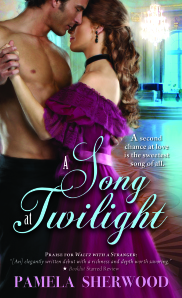
F is for Finished. Namely, the edits for A Song at Twilight, my October 2013 release, which I turned into my editor a little over a week ago. Revising is a task fraught with peril, but I do feel that the book as a whole is stronger now, especially the early part.

songattwilightcover-1

It’s a strange sensation to have that off my hands at last–liberating and lonely at once, as my mental attic is currently unoccupied. But new tenants are about to move in. Which leads me to . . .

F is for Family–specifically of the fictional persuasion. Two imaginary clans are now competing for my attention, insisting that their stories be told. I’ll be sure to let you know who wins out!

F is for Free. I spent this past week on call for jury duty–always a bit of a nuisance because you must check in every day to see if you’re needed, so it’s impossible to plan anything more than 12 hours in advance. Fortunately, my services were not required this time.

F is for Fun. I’d like to have some soon, which brings me to . . .

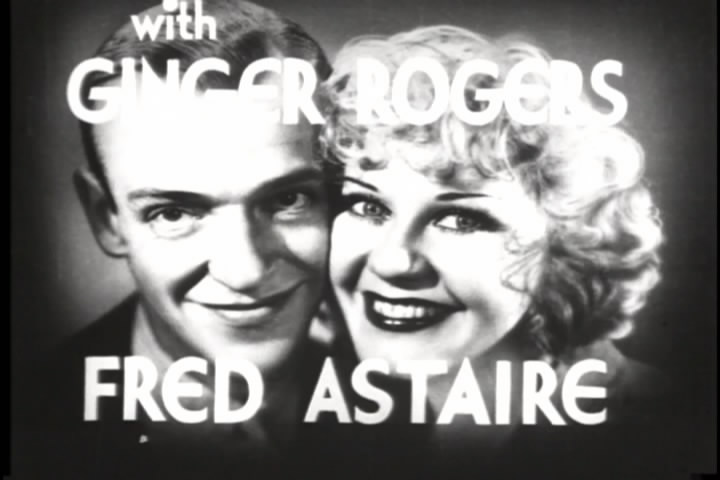
F is for Fred Astaire/Flying Down to Rio. One of the Christmas presents I enjoyed most was a DVD collection of Astaire/Rogers films. By this time, I’ve rewatched several of them. And while Swing Time remains my favorite, I got a kick out of watching “the good parts” version of their first film Flying Down to Rio (1933).

Flying_Down_to_Rio_Astaire_and_Rogers

Fred and Ginger are humble supporting players here, billed fourth and fifth (and Ginger comes before Fred for the only time in their collaboration), but they run away with the film, stealing it from purported leads Gene Raymond and Dolores Del Rio. (Del Rio is at least decorative, but Raymond is one of the most lumpen, unappealing leading men I’ve ever watched, and his character–a dilettante composer whose eye for the ladies frequently costs his band paying gigs–is annoying too). Fred plays “Fred Ayres” (real stretch in the names department, there!), the one who really runs the band while best pal Roger (Raymond) chases all the wrong skirts, including Brazilian beauty Belinha (Del Rio). Ginger is “Honey Hayle,” the band’s pert lead singer, who may or may not be Fred’s girlfriend. While they partner each other in a lively “Carioca,” they share no kisses (a fine romance, my friend, this is!), but are last seen getting happily sloshed together at the end of the film. Small wonder that audiences wanted more of these two!  So, while Flying Down to Rio is a mixed bag, any Fred-Ginger scenes in it are worth watching, as is the unapologetically over-the-top climactic number featuring chorus girls performing on the wings of airplanes.

So that, in a nutshell, is how I’ve been spending the last five or six weeks. Revising, creating, waiting, and watching. Now that things have calmed down, I hope to be around on this blog a bit more often.

See you around!