 Generally, I’m not overly comfortable doling out advice about writing. The process is so different for everyone, and what works for some may not work for others. And I certainly don’t mean to set myself up as the ultimate authority on the subject. On the other hand, I an grateful to all the writers who have taken the time over the years to post their own thoughts on the craft. There’s nothing quite like discovering that a successful author may have the same opinion on a subject as you, a struggling, aspiring writer. Or finding that the method that author suggests turns out to be just the thing to get you through a tough spot in your manuscript–or even your life. Bottom line: it usually helps and seldom hurts to pass on whatever you’ve learned to others in the same boat. And for writers, who so often live in their own heads, conjuring worlds and people out of imaginings, the reminder that they’re not alone can be a particular blessing.
This List of Ten was posted on my old blog, approximately one year before I completed my first submittable manuscript, four years before I signed with an agent, five years before I received a contract, six years before my debut novel was published. Reading it over, I was amused by how earnest and vehement I sounded. And yet, surely earnestness and vehemence are not only pardonable, but inevitable when discussing your life’s work and consuming passion. I also discovered that, despite the intervening years and everything I’ve learned since, I still believe in everything on that list. So, this remains, more or less, My Truth. Maybe it’s someone else’s Truth too. In any case, in the interests of paying it forward, here are Ten Things I Feel to be True About Writing.
1. Any writing worth doing is worth doing well. I’m vain enough to want something out there with my name on it to be as good as I can make it at the time of creation. That doesn’t mean that I won’t look back on that project later and see more of its flaws. But if I know it was the best of which I was capable at the time, I’ll find a way to make peace with it, deficiencies and all.
2. Writing and reading are inextricably connected. The more you read and the more exposure you have to writers (both good and bad), the more you develop a sense of the written word and how it works. Many of my favorite writers were and are avid readers themselves.
3. Writing is an organic process and process is as important as destination. Who hasn’t dreamt about writing a masterpiece/best-seller? I sure have! But that doesn’t happen often or overnight. Allow yourself the time to be derivative, clunky, and even (gasp!) not very good. A writer is a work-in-progress too, and very few are brilliant first crack out of the barrel. Keep writing, keep learning, keep developing — you’ll get where you want to be eventually.
4. Don’t write about what you know, write about what you love. Write about what stirs your feelings and provokes your thoughts. Write about what excites and interests you, because if you’re bored with your subject–however knowledgeable you are about it–how can you expect anyone else not to be? As a corollary to this, once you’ve discovered what you love, find out what you need to know about it, whether through experience, research, or discussion. However, you don’t have to be a starship captain or a detective yourself to write a good SF or mystery novel.
5. There are going to be moments when the words and ideas come flooding out and you know, beyond a doubt, that writing is what you are meant to do. But there will also be fallow periods, dry spells, and periods of mind-bending frustration. There is no one way around these difficulties. If you’re driven enough and stubborn enough to overcome them, you’ll find a way.
6. Don’t be so wedded to one idea or scenario that you close your mind to other, possibly stronger ones. I’ve had the opportunity to practice that myself recently, more than once. In one case, changing the main POV character revitalized everything. In another, reworking the setting has opened the door to all kinds of possibilities, intimidating but exhilarating too.
7. Some projects will get finished, others won’t. It depends on how much you care about each. It’s not a crime to lose interest, change your mind, or take a stronger liking to a different plot bunny. (Disclaimer from Present-Day Me: just make sure you’re not under contract for one of those unlikely-to-be-finished projects. That could be a problem!)
8. Character is the strongest aspect of any fictional work. If the characters are compelling enough, most readers are willing to follow them anywhere — or at least to give them the benefit of the doubt. Character should drive story, not the other way around.
9. Sharing your writing is worth the risk. Betas and/or Wise Readers can be invaluable, whether they offer wholehearted encouragement or incisive critique. It’s a good idea to have both, though. Just let them know which one you need most.
10. Be true to your vision. That doesn’t mean stop listening to good advice from readers on how you might improve. But if some element crops up that feels inherently false to you, think twice about keeping or including it. At the end of the day, it’s still your baby and no one else’s.

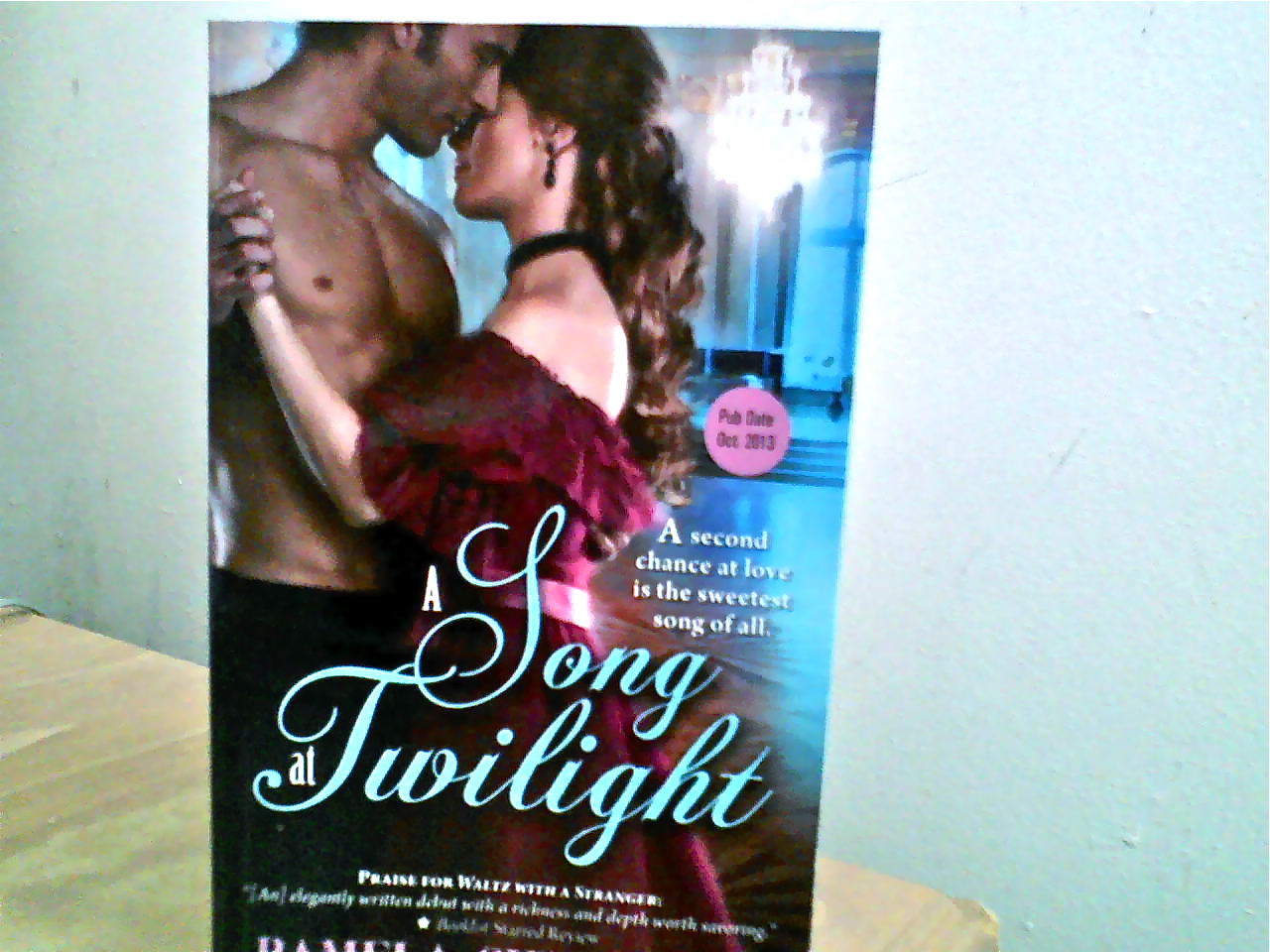 One of the most exciting “author moments” is seeing the ARC of your book for the first time. Sure, it’s an uncorrected proof. Yes, you will almost certainly find a wince-inducing glitch or two when you start looking through it, some little or even not-so-little error that got past your red pencil the first, second, third time you edited your manuscript and will make you smack your head and wonder aloud, “How did I miss that?” And yes, you will thank your lucky stars that you get a final chance to expunge those errors when the page proofs/galleys arrive.
 Hello, everyone! Just a short entry to announce I’m off to the RWA National Convention, being held this year in Atlanta, from July 17-July 20. Last year in Anaheim–practically my back yard–was my first experience at RWA, and I very much enjoyed the chance to meet other romance writers at every stage of their career. Back then, I was in the process of transitioning between being a writer and being an author, having signed my first contract but still awaiting publication, scheduled for six months down the road. I knew I had a lot to learn, and I was eager to learn it.


 Blue Stockings & Crossed Genres