Spotlight: Mary Jo Putney (Book Giveaway of Sometimes a Rogue )

Welcome to what I hope will become a regular feature on this blog–the Spotlight column, focusing on guest authors–whether longtime favorites or brand-new faces–and their works. This week, for the maiden voyage, I’m delighted to host an author whose books I’ve loved since I was a wet-behind-the-ears graduate student, and whom I had the pleasure of meeting at last summer’s RWA conference in Atlanta: Mary Jo Putney.

MJP-1579HR-Color--pic1Here, Mary Jo talks about her newest release, Sometimes A Rogue, which came out in late August, and her long career as a romance author.

SPOTLIGHT Q&A

 1. What was the inspiration for Lady Agnes Westerfield’s Academy and how did his experiences there shape your hero, Rob Carmichael?

MJP: I find the idea of deep male friendships sexy, at least partly because it demonstrates that they are loyal and capable of emotional connection.  In my Fallen Angels series, the core characters met at Eton, where they became family for each other, since each of them needed that.

When I was thinking about a premise for a new Regency series, I wanted to do something similar, but different.  The Westerfield Academy takes that male bonding idea and ups the stakes.  When I thought of the school’s tagline, “for boys of good birth and bad behavior,” I knew I had a winner. <G>

Boys end up with Lady Agnes, who is a generous and accepting foster mother to them all, not necessarily because they are delinquents, but because they aren’t fitting the molds their families or society want.  Rob Carmichael is the despised son of an earl’s young second wife.  His relationship with his father is bad and with his older brother, worse.  At the Westerfield Academy, he makes loyal friends, develops a solid sense of himself, and the ability to adapt to whatever life sends him—and it sends him a lot!

2. Several of your novels feature identical twins with complex relationships who end up changing places–Kit/Kira in Dancing on the Wind, and Dominic/Kyle in The Wild Child. How does Sarah and Mariah’s relationship compare to those of your other twin pairs and what do you find especially appealing about “trading places” trope?

MJP: Identical twins fascinate because they look alike and have many traits in common, yet they are distinct individuals.  Unlike Kit and Kira and Dominic and Kyle, Sarah and Mariah were raised apart, and Mariah didn’t even know she had a twin.  Since they meet as adults, in some ways they have a less complicated relationship: they can just be friends and enjoy the bond that immediately manifests.

As for the trading places, it’s always a fun plot device.  Again, Kit/Kira and Dominic/Kyle are different because they exchange places while they’re among people who know them.  When Sarah substitutes herself for her very pregnant sister, she is among people who don’t know her, but her situation is dangerous, unlike the other twin pairs.  Luckily, she’s a lady if not a duchess, so she can carry off the substitution fairly easily.  Other than being in desperate peril, of course!

 3. What would you say were your hero and heroine’s strongest/weakest traits, and what makes them the perfect match for each other?

MJP: Both Rob and Sarah are resilient and able to deal with life well, but they’ve become too good at “settling” for what they have.  Deep-seated emotional insecurities that make it difficult for them to give and receive love, so they think love is something they won’t have.  Because they have similar issues, they move rather slowly and warily into love.  But Rob is tough and smart and honorable, and Sarah is sunny-tempered and intrepid, so shared adversity sets them on the road to a deep and lasting love.

 4. Your Fallen Angels series–perhaps your best-known work–consists of seven books: the stories of the four “angels” themselves and three of their friends/relatives. Your Lost Lords series has the potential to be even longer. What do you do to keep a series fresh, for you and your readers?

MJP: I don’t focus on the beau monde social scene, so the stories and characters can be quite different.  Also, I don’t draw in earlier characters unless they serve a real story function, so in each new book, you won’t see everyone who has come before; that would boring.  As you say, the Lost Lords series could go on indefinitely, since schools keep getting new classes of students. <G>

 5. As this year’s recipient of the Nora Roberts Lifetime Achievement Award, what is the most valuable piece of advice you would offer writers at the beginning of their career?

MJP: Go for quality over speed, and work both hard and smart.  I think that having a long term career writing fiction requires resilience and an ability to roll with the punches even more than it requires talent.  Talent is fairly common, but it’s tenacity that keeps an author standing for years.

Thank you for agreeing to participate in this new feature!

MJP: Thanks for having me, Pamela!

Comment before midnight PST, October 13,  for a chance to win a copy of Sometimes A Rogue. The winner will be notified by email.
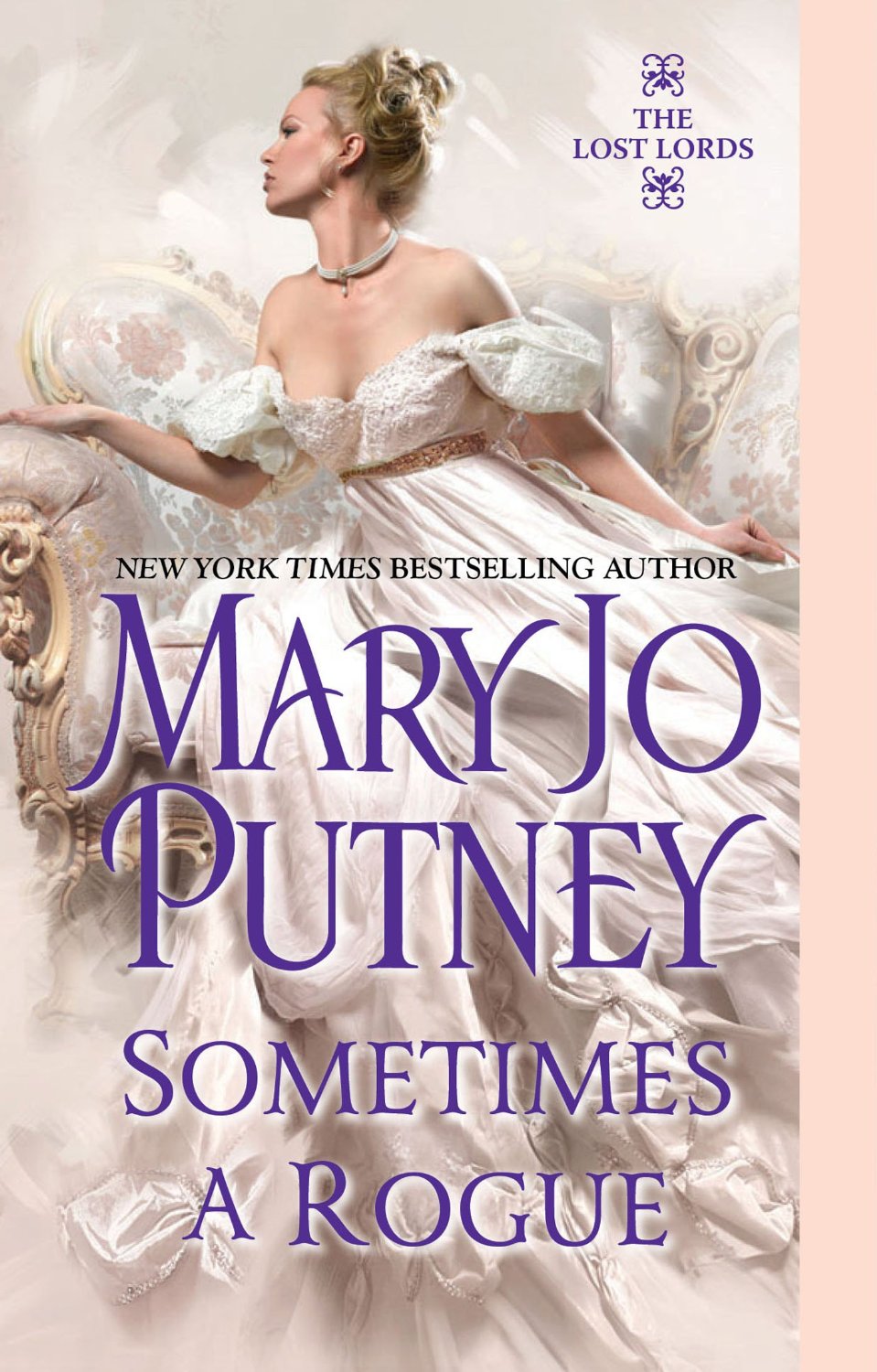
81abjMpj4RL._SL1500_Even the most proper young lady yearns for adventure. But when the very well bred Miss Sarah Clarke-Townsend impulsively takes the place of her pregnant twin, it puts her own life at risk. If the kidnappers after her sister discover they’ve abducted Sarah instead, she will surely pay with her life…

Rob Carmichael survived his disastrous family by turning his back on his heritage and becoming a formidable Bow Street Runner with a talent for rescuing damsels in distress. But Sarah is one damsel who is equal to whatever comes. Whether racing across Ireland with her roguish rescuer or throwing herself into his arms, she challenges Rob at every turn.

BIO

Mary Jo Putney was born in Upstate New York with a reading addiction, a condition for which there is no known cure.  After earning degrees in English Literature and Industrial Design at Syracuse University, she did various forms of design work in California and England before inertia took over in Baltimore, Maryland, where she has lived very comfortably ever since.

While becoming a novelist was her ultimate fantasy, it never occurred to her that writing was an achievable goal until she acquired a computer for other purposes.  When the realization hit that a computer was the ultimate writing tool, she charged merrily into her first book with an ignorance that illustrates the adage that fools rush in where angels fear to tread.

Fortune sometimes favors the foolish and her first book sold quickly, thereby changing her life forever, in most ways for the better.  (“But why didn’t anyone tell me that writing would change the way one reads?”)  Like a lemming over a cliff, she gave up her freelance graphic design business to become a full-time writer as soon as possible.

Since 1987, Ms. Putney has published over forty books and counting.  Her stories are noted for psychological depth and unusual subject matter such as alcoholism, death and dying, and domestic abuse.  She has made all of the national bestseller lists including the New York Times, Wall Street Journal, USAToday, and Publishers Weekly.  Five of her books have been named among the year’s top five romances by The Library Journal, while three were listed in the Top Ten Romances of the year by Booklist, published by the American Library Association.

A ten-time finalist for the Romance Writers of America RITA, she has won RITAs for Dancing on the Wind and The Rake and the Reformer and is on the RWA Honor Roll for bestselling authors.  She has also been awarded two Romantic Times Career Achievement Awards, four NJRW Golden Leaf awards, plus the NJRW career achievement award for historical romance.  In 2013 she was awarded the Romance Writers of America Lifetime Achievement Award.

Though most of her books have been historical romances, she has also published three contemporary romances, several paranormal historicals with strong fantasy elements, a young adult historical fantasy trilogy, and numerous novellas and short stories.  She is currently writing the New York Times list bestselling Lost Lords historical romance series for Kensington.

Ms. Putney lives near Baltimore, Maryland with her nearest and dearest, both two and four footed.  She says that not least among the blessings of a full-time writing career is that one almost never has to wear pantyhose.

Visit her on the web at maryjoputney.com

ETA: Sandy wins the giveaway of Sometimes A Rogue! Please contact me with your mailing address so your prize can be sent to you as soon as possible.
Release Day for A Song at Twilight, plus Double Book Giveaway!

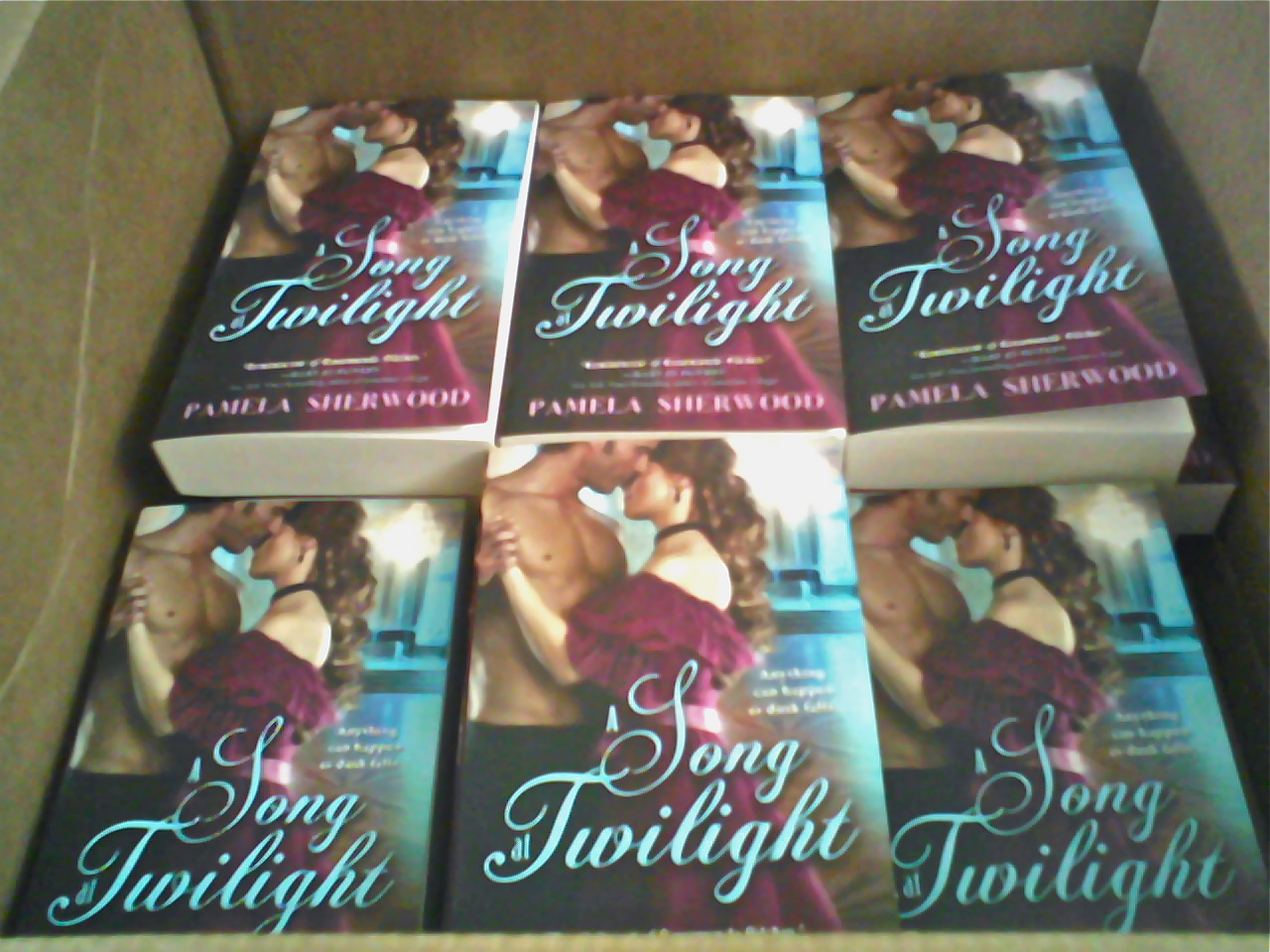
P09-30-13_11.39At long last, A Song at Twilight–the sequel to Waltz with a Stranger–is here! And just like I was ten months ago, I’m excited, apprehensive, thrilled, and eager to see the book officially out in the world.  Will there ever come a day when I greet a new release with a reaction bordering on the jaded and blasé? I sure hope not!

You learn something new with each book you write, I’ve found. With Waltz with a Stranger, I discovered it was possible to keep going, even when life hands you disappointments and distractions by the truckload. And that perseverance pays off,  because Waltz was the book that sold first.

With A Song at Twilight, I learned that I could write to a deadline, in spite of the prospect making me break out in a cold sweat. Not that I haven’t written to deadline before and successfully, but an article of some 10-20 pages doesn’t inspire the same degree of abject terror that a 400-page manuscript does!

On the creative front, A Song at Twilight taught me to take risks. Because when I first started to develop Robin and Sophie’s romance, I had only the sketchiest idea of where I was headed. I only knew that the book needed to be its own thing and that I didn’t want to write a story that was just like the one I’d finished telling. So I took a hard look at where I’d left these two characters–smiling tentatively at each other across the breakfast table, hoping that their budding romance might yet have a chance–and mapped out the next year during which they grew still closer . . . and then blew it all to kingdom come. The fallout from that sent them reeling in opposite directions, forcing them to rebuild their lives without the consolation of each other’s company, and making them stronger–and in my opinion, more interesting–characters. Characters with the will to fight for each other when fate unexpectedly hands them a second chance. Characters who understand how precious real love is, and that it’s worth the effort to hold on to it when you find it.

Other risks included taking a non-linear approach to the story, weaving back and forth in time during the first third of the book to present the most complete picture of Robin and Sophie’s relationship. And dealing with the necessity of overlap between A Song at Twilight and Waltz with a Stranger. Generally, I prefer sequels that are less intertwined with previous books in a series. But this time, whether I liked it or not, some key events from the first book required revisiting from a different perspective in the second book, and I could not ignore the repercussions of those events for Robin and Sophie. That also involved the reappearance of a character who’d caused considerable trouble for the “good guys” in Waltz with a Stranger. While his actions there were exposed and successfully thwarted, his ill-will towards Robin, in particular, persisted–to the point where I realized he was not going to go quietly and that he’d have to be dealt with more conclusively this time around. I can only hope that readers relish his eventual comeuppance!

Some of these risks may work for readers, some may not. But I hope that those who enjoyed my first book will be willing to give A Song at Twilight a chance as well. Because this book grew into my heart as I got to know it better, in spite of or perhaps even because of all the challenges it presented to me.

Anticipating the question “Is it necessary to read Waltz with a Stranger before reading A Song at Twilight?” Well, I don’t think you have to, necessarily (a reviewer from The Romance Reviews understood–mostly–and enjoyed Book #2 without having read Book #1), but you might get more out of it if you do.

Which is why I’m giving away not only a signed copy of A Song at Twilight this week on my blog, but one of Waltz with a Stranger as well. So you can comment below until midnight PST, October 8, for a chance to win both books in the series. (To whoever wins: if you already own Waltz with a Stranger and would prefer not to receive an extra copy, just let me know when the time comes.)

Meanwhile, I’ll be embarking on a virtual tour for much of October, promoting the book. The tour itinerary can be found here, and most of these stops will be offering giveaways of A Song at Twilight. I hope some of you will drop by and say hello!


ETA: Gina D. wins the Double Book Giveaway of A Song at Twilight and its prequel, Waltz with a Stranger! Please contact me with your mailing address, so I can send your books off to you as quickly as possible.

However, I will be giving away a copy of A Song at Twilight  to a commenter on a weekly basis for the remainder of the month. See my next blog post for details. Thank you to everyone who stopped by with their good wishes–readers help make the magic happen!

“L” is for “Location”: The Pleasures of On-site Research

The Alphabet Posts are back!  (And believe me, it took a few minutes to remember which letter I’m on. Ahem …)

For me, research is one of the most fascinating parts of writing a book. And for a (predominantly) historical romance writer, that generally means submerging myself as much as possible in the past, absorbing the details and attitudes of a bygone age, while trying to keep my connection to the story emotional, visceral, and real. So I read letters, memoirs, and journals, and familiarize myself with the lives and careers of historical figures who might have influenced the creation of my characters.

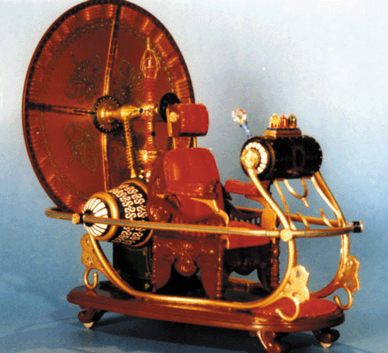
Model of H. G. Wells' Time Sled
Model of H. G. Wells’ Time Sled

Virtual time travel is wonderful, of course, and with the wealth of print and online resources now available, you can get closer to the past than you ever imagined. But even the best secondary sources can’t always recapture the experience you want to have as a writer and to convey to the reader. And that’s when on-site research becomes highly desirable, even essential.

The late Margaret Frazer attended a reenactment of medieval mystery plays, performed in the open air by a traveling troupe, as part of her research for A Play of Heresy, her last Joliffe the Player mystery. Deanna Raybourn, author of the Lady Julia mysteries, traveled to England because she needed to smell a moor for her third book in the series. And I’ve heard some Regency authors discuss the upcoming bicentennial of Waterloo and debate going to visit the battlefield to get a genuine “feel” for the last battle of the long-running Napoleonic wars.

Battlefield of Culloden, photo by Auz

Having once visited Culloden Moor, though not for research purposes at the time, I can attest that the old battle sites do carry a certain “vibe.” In Culloden’s case, it was a mournful, desolate one, enhanced by the overcast grey sky and the scrubby reddish-brown brush–the color of old blood–that covered the terrain. I was depressed even before I saw the stones marking the mass graves where Highland clans had fought and died for the Jacobite cause.

Magdalen College, Oxford University, photo by Romanempire

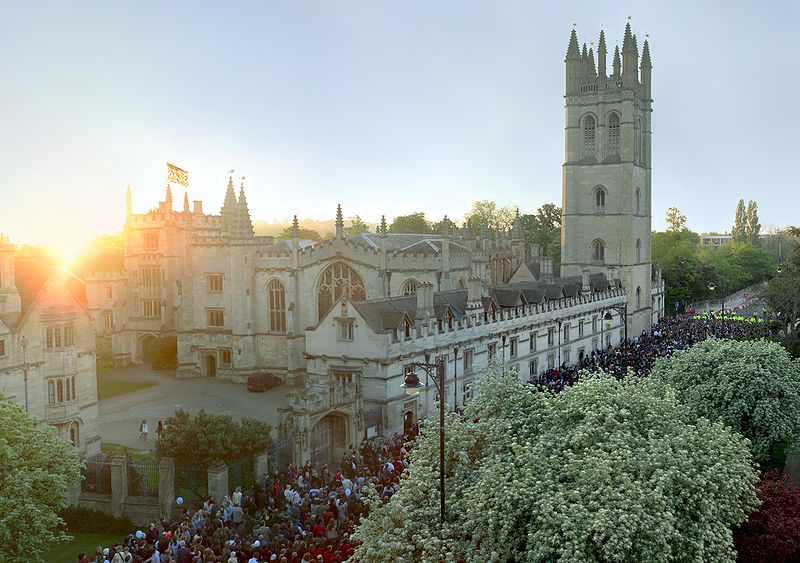
On a happier note, I’ve also visited Oxford University, though sadly my memories of it aren’t as vivid as they could be. I’ve seen Blenheim Palace and Stonehenge.  I’ve walked on the medieval walls surrounding York, which could come in very handy in one of my WIPs, set in Yorkshire. I’ve seen the Elgin Marbles, the Rosetta Stone, and a fascinating collection of cameos and intaglios at the British Museum. I’ve walked my feet off visiting the Tower of London, and seen–though not heard–the Tower ravens hopping about the yard. And I’ve been to Cornwall, though not, alas, as close to the north coast as my characters are.

Unfortunately, on-site research of this nature is a luxury. My first-hand memories of the UK were all acquired on one trip, years ago. Few of us have the means or opportunity to jet off to see every detail of our books’ setting for ourselves. So it’s pure serendipity when you find what you need much closer to home.

MemorabiliaWallIn my case, that turned out to be the Hard Rock Cafe. Because, as it happens, one of my WIPs is actually a contemporary–or maybe it’s more accurate to call it a “modern” historical–romance starring a British rock band, set in the 1990s. Up until now, my research process for this story has consisted of mining my own memories as a child/teen of the ’80s, reading interviews with actual British bands of the time, watching concert footage and old music videos. Not until last month did I realize that some of what I might be looking for–the ambiance and overall set-up of a theme restaurant/live-music venue–could be found at the HRC.

In retrospect, it seems strange not to have thought of it before–there have been several HRCs in California, though several have closed over the years. But there was still one within driving distance in Hollywood and that was where my companion and I headed one Sunday morning.

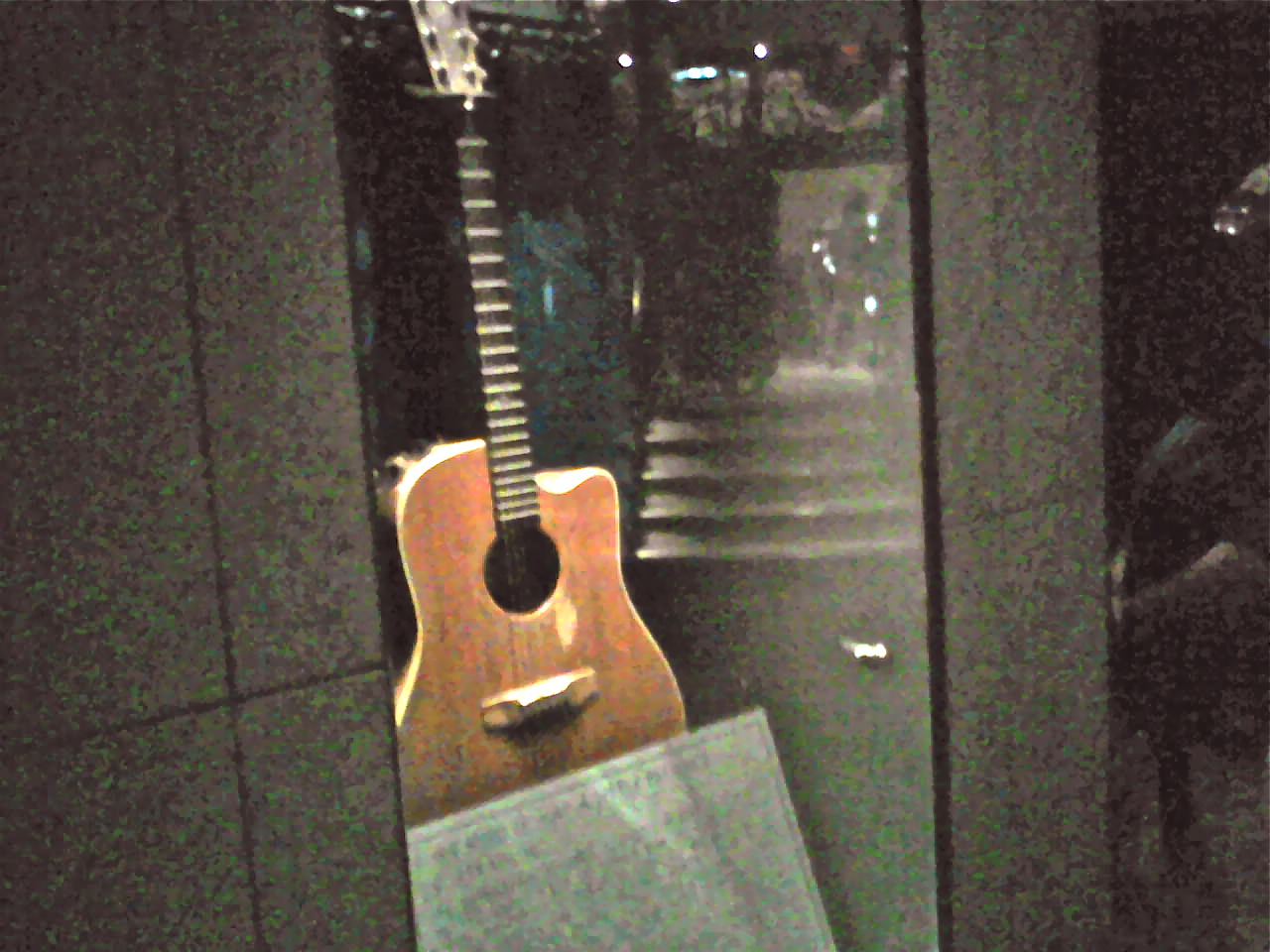
StefaniGownWhat we found exceeded our expectations. A collection of rock-n-roll memorabilia that included such items as Jim Morrison’s leather pants, one of Gwen Stefani’s evening gowns, guitars played by groups like Guns ‘N’ Roses and Steely Dan, and manuscripts on which original lyrics were scribbled; multiple TV screens broadcasting vintage music videos, including Joan Jett’s “I Love Rock-n-Roll” and the campy Jagger-Bowie ’80s cover of “Dancing in the Streets,” which I find impossible to watch with a straight face; a tiered seating arrangement that explained how HRC could conceivably fit several hundred people in their space even with live entertainment; and, of course, the stage itself, complete with speakers and standing mics. Best of all, we met some friendly, chatty servers who were more than happy to dish about the place and what it was like when a band was booked to play there.

GnRGuitarSo we stayed for a couple of hours, soaking up atmosphere, asking questions, and having a very good lunch on top of all that. We left well-satisfied on all levels, and are even contemplating a return trip in the not-too-distant future. When the answers to our research questions are just a short drive rather than a transatlantic flight away, it seems a shame to waste the opportunity.

After all, don’t we owe it to the Muse?

RWA 2013: Parting Thoughts

P07-17-13_08.32Almost two months after the RWA conference in Atlanta, I have finally collected my thoughts enough to offer some kind of postmortem on those intense 4-5 days. At least to compile a list of the things I am most likely to remember–from the serious to the frivolous, from the ridiculous to the sublime.

So, in no particular order:

15 Things I Discovered While in Atlanta for the Conference

1. More than 2000 people in an enclosed space, even one as large as the Marriott Marquis, generate a powerful amount of noise.

2. Atlanta natives can be the nicest, most helpful people imaginable–from the security guard who personally escorted me across the skybridge from the Hilton to the Marriott so I’d know how to get there to the woman on the street corner who gave Hopelessly Lost, Confused Me the clearest, most comprehensible directions to my intended destination. (Yes, there were some folks who were less than helpful and a few that were downright rude, but by and large, I was favorably impressed by “the kindness of strangers.”)

3. Mary Jo Putney, a historical romance author whose work I’ve long admired, is as classy and gracious in person as her books and blogs suggest. Not only did she provide a lovely quote for my soon-to-be-released book, she invited me to sit at her table during the RITA Awards ceremony on Saturday night when she received the Nora Roberts Lifetime Achievement Award. I was delighted to accept, and met several other authors that evening, including Cara Elliott and Jo Beverley, who were also very gracious. Romance is a very welcoming community, on the whole.

4. RITA awards are heavy–yes, I got to hold Ms. Putney’s for a few seconds. The metal ones presented today are manufactured by the same company that manufactures the Oscars. (According to Eloisa James, they used to be made of chocolate.)

5. Kristan Higgins, the contemporary romance author, is a terrific public speaker, delivering a sometimes humorous, sometimes heart-wrenching talk on how romance novels comforted and sustained her during some of her most difficult times.

6. Cathy Maxwell, the historical romance author, is no slouch either: she spoke movingly of a man who’d been a brilliant artist but who lacked the confidence in himself even to sign his name to his works.

7. A hybrid career–combining traditionally published and indie-published works–has much to recommend it, at least in theory. Especially if you have a head full of stories, some of which might be too offbeat to appeal to mainstream publishers.

8. Forms of social media are more numerous and confusing than ever. (This may not be news to anyone else, but I felt obscurely comforted to know I wasn’t the only person bewildered by Facebook, Tumblr, Pinterest, and their ilk.)

9. There are more ways to get your work out there and in front of readers than could have been imagined just a few years ago.

10. No one understands a writer quite like another writer.

11. Book signings can be feeding frenzies, especially when the books are free.

12. The Georgia Aquarium–the world’s largest, apparently–is all kinds of awesome, especially the Cold Water gallery that houses sea otters, beluga whales, and South African penguins.

13. Don’t set foot outside in Atlanta during the summer without looking out the window first. Checking the Weather Channel beforehand is probably a good idea too.

14. The “plane train” at the intimidatingly large Atlanta airport is a great way to get from place to place. (I just wish I’d known about it before I walked the 100 miles or so from the terminal to domestic baggage claim on my arrival.)

15. Writing is the wellspring from which everything flows. A simple but fundamental truth that can too often get lost in the flurry of marketing, promotion, and social media. And yet this is something that every writer emphasized in every session in which the subject arose. Tell your stories. Tell them to the best of your ability. Protect the work. Don’t let being an author get in the way of being a writer. Nora Roberts was particularly vehement on the subject, saying that one mistake she thinks beginning writers are making is focusing too much on “market, market, market” and not enough on “story, story, story.” Words to live by, Ms. Roberts.

Well, that’s all for Atlanta, folks! Maybe a year from now, I’ll have a similar list for the San Antonio conference. Hope to see some of you there!

RWA 2013, Part 2: Baptism by Thunderstorm

800px-Rain_in_Downtown_Atlanta,_2013

Rain in Downtown Atlanta, photo by callison-burch

Contrary to the ’70s popular song, it does rain in Southern California.

But not like this.

Dumbfounded, I stood in the lobby of my nice, just-slightly-offsite hotel and stared out the sliding glass door at the rain bucketing down from the overcast Atlanta sky.  At the trees lashed by furious gusts of wind. At the bolts of lightning that occasionally flashed overhead.

It hadn’t looked like this an hour ago. I wasn’t sure it had looked like this even half an hour ago. (Memo to self: when you’re staying in a place where the weather is almost notoriously unstable, don’t go anywhere without looking out the window first.)

I was a five minute walk away from the conference hotel, where I was due to participate in a group signing within the next half-hour. In this weather, it might as well have been five miles.

An effort to raise the hotel shuttle driver and ask for a lift to the signing proved fruitless. Flustered but determined, I pulled on a plastic raincoat, grabbed my umbrella, and ventured out into the storm.

Within two minutes, my umbrella had turned inside out, my dress was wet from the thigh down, and my stockinged feet squelched in their sandals. My glasses, streaked with rain, were all but useless for visibility purposes. Buffeted by the wind, which was driving the rain sideways, fearing I’d be knocked flat on my face any second, I took refuge in the foyer of the restaurant next door.

My mind raced furiously, trying to calculate how much time I had to arrive at the signing; whether I had time to change into dry clothes before setting out again (don’t be ridiculous, my subconscious retorted, Outfit #2 will get just as soaked as Outfit #1); whether I could just ride out the storm and show up a little later–or not show up at all, since my absence would probably not even be noticed in a room full of authors (most of them far more well-known than I) and fans.

Call it gumption, stubbornness, or insanity, but I rejected the last idea almost at once. Committed was committed. This was my first signing ever, and I wasn’t going to blow it off, no matter how bad the weather was or how obscure I was. Come hell or high water–and Atlanta was currently providing plenty of both–I was going to that signing. And as close to the scheduled time as possible.

I couldn’t tell if the rain had let up at all, maybe infinitesimally, when I braved the storm again. The wind was still gusty, the precipitation pattering steadily down, but I was already so wet I didn’t notice if I was getting any wetter. My top priority was finding the safest, dryest way to get to the conference hotel.

pedestrianbridge_0110Fortunately, I knew about the skybridges, the enclosed walkways that linked several of the main downtown hotels, including the conference hotel. But which one was closest? I squinted and squelched my way across the street to a business plaza that had a skybridge that led somewhere (the person in charge of security had been somewhat less than helpful about that when I’d asked earlier). But I figured if I took the bridge I might at least end up in a place I recognized, and I could navigate the rest of the way from there.

And so it proved. Even a little better than expected, as I’d thought I might end up in the hotel next door. Instead, I found myself on the atrium level of the conference hotel, the very place where the signing would be held. And there was time for a brief stopover in the restroom to remove my rain gear and tidy myself just enough to eliminate the half-drowned-rat look. Umbrella and raincoat hastily folded and put away in my tote, I hurried into the ballroom with minutes to spare, found and took my seat. My dress was still sopping, the skirts clinging to my legs like sheets of fresh papier-mache. But my cardigan was fairly dry, so I draped it over my knees and pulled the skirt down to cover it. At least I had a bit of insulation now.

And I’d made it. I’d arrived–and on time (barely), at the place where I was supposed to be. That was a victory in itself. And I also had one hell of a “war story” to tell, to anyone interested in listening!

Then the doors opened, the people poured in, and I proceeded to be very busy for the next two hours. Even when you’re not signing many books yourself, you end up watching those who do–what they say, how they conduct themselves, how readers react to them. In all, it was a learning experience every new author should have–though I recommend skipping the thunderstorm part, if you can! (Apropos of which, every now and then, a rumble was heard or a flash was glimpsed through the window blinds. But by the time the signing was over, the storm was a distant memory.)

Recent events have had me reflecting on this experience–not nostalgically, but perhaps philosophically. Because there will always be storms, whether literal or metaphoric. Always things you can’t control, but which affect you anyway.
And when faced with those, sometimes the best you can hope for is a quiet place where you can ride out the storm until everything calms down.

But when that’s not an option, all you can do is fulfill your individual obligations, soldier on, and try to chart your own course through the storm–until you come out the other side, to the place where you’re supposed to be.Rainbow_At_Maraetai_Beach_New_Zealand