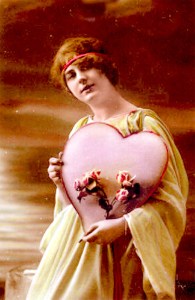
Happy St. Patrick’s Day: Limerick Contest with Prize and Giveaway!

PostcardStPatricksDaySouvinir1912

Earlier this week I blogged over on Casablanca Authors about Ten (Non-Alcoholic) Things to Enjoy on St. Patrick’s Day.  However, I left one important thing off the list–even though there’s some debate over whether that thing is truly Irish or not! I’m talking about the limerick, one of the most popular and instantly recognizable forms of light verse. They can be witty, raunchy, contain clever epigrams, terrible puns, or blatant double-entendres.

Edward Lear, a Victorian poet, is among the best known perpetrator of limericks, though his tend to be fairly mild by today’s standards.

379px-Edward_Lear_drawing

There was an Old Man with a beard,
Who said, “It is just as I feared! —
Two Owls and a Hen,
Four Larks and a Wren,
Have all built their nests in my beard!”

(Lear, before he grew a truly terrifying beard himself in later life.)

The following examples of limericks aren’t attributed to any particular author, possibly with good reason!

There was an old man of Khartoum
Who kept a tame sheep in his room,
“To remind me,” he said,
“Of someone who’s dead,
But I never can recollect whom.”

There was a young lady of Ryde
Who ate some green apples and died.
The apples fermented
Inside the lamented,
And made cider inside her inside.

There once was a person from Lyme
Who married three wives at a time.
When asked, “Why a third?”
He replied, “One’s absurd,
And bigamy, sir, is a crime!”

I sat next to the Duchess at tea;
It was just as I feared it would be.
Her rumblings abdominal
Were simply phenomenal,
And everyone thought it was me!

This week, despite the spurious lineage of the limerick, I’m holding a limerick-writing contest. The first line is already provided. Entrants can choose from the following:

1. There was a young lady from Mayfair . . .

2. There once was a duke from St. James . . .

All entries must be turned in by midnight on Tuesday, March 19. I’ll be awarding a $25 Amazon gift card and a signed copy of my novel, Waltz with a Stranger, to the winner, to be determined by March 25.

Good luck to all participants–and have fun!

“H” is for “Hearts,” plus Book Giveaway of Waltz with a Stranger

BigPinkHeart

Valentine’s Day and President’s Day fall very close together this year, so I’m about to take advantage of that fact by paying tribute to some of my favorite romantic couples in fiction in this weekend’s post.

Granted, as a voracious, lifelong reader, it’s hard for me to single out only a few. I could probably devote an entire blog to fictional couples I love and why, but I managed to narrow it down to 10 (plus 5 honorable mentions) by restricting myself to one entry per author and relying heavily on the “re-read factor.” Meaning that, whenever I pick up a book featuring this couple and start leafing through the pages, odds are very good that I’ll be hooked all over again, no matter how many times I’ve read their story before.

Ranking my favorites in order of preference, however, is a task beyond my capabilities! I love all of these couples, and their standings may be said to fluctuate on any given day. So, instead, I arranged them chronologically–in the approximate order that I first discovered them as a reader.

1. Jane Eyre and Edward Rochester (Jane Eyre by Charlotte Brontë): I discovered “frail but indomitable” Jane and her brooding hero with his mother of all dark secrets as a teen  being introduced to “the classics.” Athough, alas, no English teacher of mine ever officially put the novel on the syllabus, which is a pity because this is the ultimate Gothic romance and it ropes you in from the start and refuses to let go of you. Jane’s resilience, intelligence, and moral integrity make her an indelible heroine, and we come to care for Rochester, despite his many flaws, partly because he sincerely loves and values Jane.

2. Elizabeth Bennett and Fitzwilliam Darcy (Pride and Prejudice by Jane Austen): Another teenage discovery! I began reading P&P around the time the 1980 BBC miniseries was being broadcast in the US (and that version remains my favorite, despite the likely greater popularity of the 1995 A&E production). Elizabeth–clever, witty, and warm-hearted, though not without flaws and blind spots–is a delightful heroine, and I’ve come to appreciate Darcy more, over the years. While we aren’t privy to his POV the way we are to Elizabeth’s, he undergoes a real transformation in the book. Namely, he changes from being all about himself–his pride, his social status, his consequence, his reputation–to being all about Elizabeth and what matters to her. And this occurs after she shoots down his first proposal in no uncertain terms. Heroes who learn from their mistakes and grow in the process are heroes who deserve a second chance.

3. Demelza Carne and Ross Poldark (The Poldark Saga by Winston Graham): One summer, Masterpiece Theater was reshowing some of its most popular series, including Poldark and Poldark II, and I was spellbound, watching this sprawling saga of an 18th century Cornish mining family unfold. Naturally, I sought out the books, which are just as rewarding–and in some respects even better, because there are more of them (only the first seven novels were dramatized for TV). But the enduring love story between stormy, sardonic Ross Poldark and earthy, vibrant Demelza Carne, whom Ross rescues as a ragged urchin and later marries, is at the heart of the books and the television series. As the years pass, the Poldarks face a barrage of challenges, and usually emerge stronger and more deeply committed to each other than ever. What more can one hope for, in a romance?

4. Beatrice and Benedick (Much Ado About Nothing by William Shakespeare): Unquestionably my favorite of Shakespeare’s comedies, largely because of the perfectly matched hero and heroine. Beatrice and Benedick are both proud, brilliant, witty, loyal individuals whose “merry war” of words hints at a fascinating backstory–a possible past romance that ended in estrangement but failed to extinguish their powerful attraction and ongoing interest in each other’s affairs. When their friends conspire to make them fall in love with each other, you sense that on some level, B & B are only looking for an excuse to admit that they never stopped caring, which comes out most powerfully in a scene where Beatrice’s beloved cousin is falsely accused of being unchaste at her own wedding. Benedick’s changing sides, switching his loyalties from his male comrades to the woman he loves, is a defining moment for the character.

5. Julitta de Montrigord and Adam de Lorismond (Red Adam’s Lady by Grace Ingram): Long before the feistiest of today’s feisty heroines ever feisted, medieval heroine Julitta swung a footstool and defended her virtue from a drunk and randy Adam de Lorismond, who’d mistaken her for a tavern wench.  A sober, penitent Adam subsequently tries to make amends by marrying Julitta and striving to win her heart. The romance between these two sharply rendered characters unfolds gradually but is never less than compelling. Prickly, independent Julitta initially resents the husband she was constrained to marry, but gradually lowers her defenses as she gets to know him as more than the medieval frat boy he appeared to be.  Caught up in the Great Rebellion of 1173–in which Henry the Young King rebelled against his father, Henry II–Adam and Julitta face danger and adversity together, ultimately emerging as true partners and true lovers. Although Red Adam’s Lady has long been out of print, it is a rich and rewarding read, well worth the effort to track down.

6. Venetia Lanyon and Lord Damerel (Venetia by Georgette Heyer): Choosing one favorite Heyer is like choosing one favorite piece of Sees’ candy. But on reflection, Venetia is for me, Heyer’s most purely romantic novel, featuring a beautiful, sweet-natured heroine who is still nobody’s fool, and a cynical rake whose saving graces include a “well-informed mind and a good deal of kindness.” His sense of humor helps as well. I’m sometimes skeptical of the “Rake reformed by innocent virgin” trope, but in Venetia, it works like a charm.

7. Amelia Peabody and Radcliffe Emerson (The Amelia Peabody Mysteries by Elizabeth Peters): One of my favorite series started with a book that I thought would be a one-off: a light-hearted romantic mystery featuring a bossy Victorian spinster and an irascible archaeologist, united by their love of ancient Egypt. Instead, Crocodile on the Sandbank kicked off a long-running series about Amelia and Radcliffe Emerson, their growing family, their menagerie of exotic pets, and their yearly adventures in Egypt, excavating tombs, artifacts, and, all too often, bodies of far more recent vintage. But it’s the Emersons’ unquenchable passion for each other and their shared vocation, along with author Elizabeth Peters’ courageous decision to have the characters age and evolve, that has had me snatching up each entry when it appears.

8. Harriet Vane and Lord Peter Wimsey (Lord Peter Wimsey Mysteries by Dorothy L. Sayers): Marrying off a fictional detective is a tricky business–all too often the spouse comes off as a mere appendage, content to be a sounding board to the detective’s brilliance or, worse, a liability to be exploited by the villains seeking to defeat the detective. Harriet Vane, however, emerges as an individual in her own right: a proud, stubborn, fiercely independent woman who doesn’t suffer fools gladly. Emotionally scarred by a murder trial, she flatly refuses to play the damsel in distress to Lord Peter’s knight in shining armor. At the same time, she cannot deny her attraction to him, nor fail to notice how attuned they are, intellectually. Their off-again, on-again association reaches critical mass at Oxford, where they finally meet as equal partners in love and detection.

9. Cordelia Naismith and Aral Vorkosigan (The Vorkosigan Saga by Lois McMaster Bujold): Take a level-headed, ferociously capable surveyor-commander from a famously liberal, egalitarian planet and match her with an equally capable admiral from a militaristic, even reactionary one. Result? A love story that somehow transcends dramatically different worlds, cultures, and beliefs, and carries with it the seeds for a transformative future that neither can imagine when they first meet, a future ultimately personified by Miles Naismith Vorkosigan, the formidable son of formidable parents.

10. Philippa Somerville and Francis Crawford (The Lymond Chronicles by Dorothy Dunnett): Commander, spy, diplomat, adventurer, and overall Renaissance man, Francis Crawford of Lymond is one of the most memorable figures in historical fiction, capable of evoking extremes of love and hate. You understand why his men would follow him to the ends of the earth–and why they might also contemplate killing him when they stop for lunch. His effect on women is equally dramatic and polarizing, not least because Lymond, while possessing a healthy libido, avoids emotional commitment whenever possible. But he meets his match unexpectedly in Philippa Somerville, a Northumbrian girl who, as a child, hates and fears Lymond after he interrogates her father, but who later reevaluates her opinion of him, becomes a companion on some of his adventures, and enters into a marriage of convenience with him to protect her reputation. While separated from Lymond, who is serving Tsar Ivan the Terrible in Russia, Philippa serves at the English court of Queen Mary Tudor and grows into an accomplished, formidable young woman. Reunited with his bride, Lymond is struck by her intellect, spirit, courage, and heart–and finds himself shatteringly, overwhelmingly, terrifyingly in love for the first time in his life.

Honorable Mentions

11. Albert Campion and Amanda Fitton (The Campion Mysteries by Margery Allingham)

12. Kit Travers and Lucien Fairchild (Dancing on the Wind by Mary Jo Putney)

13. Duncan Kincaid and Gemma James (The Kincaid/James Mysteries by Deborah Crombie)

14. Annais and Sabin FitzSimon (The Falcons of Montabard by Elizabeth Chadwick)

15. Eve Dallas and Roarke (The In Death series by J. D. Robb)

Readers, who are your all-time favorite romantic couples, and why? I will be giving away a signed copy of Waltz with a Stranger to two random commenters this week.

Have a great holiday weekend!

“G” is for “Gung Hay Fat Choi”–Happy (Chinese) New Year!

800px-Ke_Lok_Si_Illuminations_01.JPGMalaysian Temple illuminated for Lunar New Year. Photo by Flying Pharmacist

As Chinese Americans, my family generally made much more of a to-do over the Lunar New Year, which could fall in either January or February. I remember bright red envelopes with a few dollars tucked inside–something every kid looked forward to receiving!; the tantalizing smells of star anise, garlic, and hoi-sin wafting from Chinese restaurants; ruddy-skinned barbecued ducks and chickens hanging from windows of Chinatown restaurants and “delis”; and the color, noise, and smoke of the lion dances.

Oh, the lion dances! When I was a little girl, I’d be beside myself with anticipation on the New Year’s weekend, knowing that we’d most likely be driving down to Chinatown to see them. (For the longest time, I thought the shaggy creatures with their huge heads and multi-colored bodies were meant to be dragons–and dragons do dance in some New Year’s festivities. But even discovering they were actually lions failed to dim the excitement.)

800px-Seattle_-_Chinese_New_Year_2011_-_71

Lion Dance Troupe in Chinatown, Seattle, Washington, 2011. Photo by Joe Mabel

A huge crowd always gathered, and it was often a challenge to find a good place to stand, especially if you were a child. But once the show started, you could count on seeing at least some of the action: the lions were pretty much in constant motion, rearing, strutting, catching the dangling offerings of money, lettuce, and mandarin oranges in their huge mouths and tossing them towards the spectators. And there were often sword dancers and drummers performing–adding even more excitement.I always brought a camera, and once, when I was about eleven, a lion dancer was especially obliging and held his position long enough for me to get an excellent shot of him, rearing the lion’s great head up to the sky.

The climax usually came, when someone lit a roll of firecrackers–thin scarlet filaments that writhed and popped like furious snakes, once ignited–and tossed them into the street. The air would turn blue with smoke, while the rapid-fire explosions reached an almost deafening crescendo. At which point, hands clapped over our ears, we’d start heading back towards wherever we’d parked the car, while the lion dance troupe moved on, to start the spectacle over in another area of Chinatown.

It’s been a while since I last saw a lion dance in person, having less tolerance for noise, crowds, and smoke than I used to. But the sight of a lion dance costume can fill me with nostalgia. Maybe someday . . .

May good fortune be yours in the Year of the Snake!

On the Road: The Tour, Week 3

pnd2

Christmas Story-telling, by John Everett Millais, 1862

Hello, again! Here I am with a quick summary of Week 3 of the tour. Coincidence or not, I’ve been happy to see some familiar screen names among the responders at these different locations.

Last week was probably the busiest so far with a guest appearance every day of the work week. On Monday, December 17, I blogged about the disabled heroine on Romancing the Book. On Tuesday, December 18, I shared my family recipe for Coconut Date Balls at Reading Between the Wines. Two interviews were logged on Wednesday, December 19, at Simply Ali and Dear Author, as part of their weekly Debut Print Author feature.  On Thursday, December 19, I participated in an ongoing holiday event at Cocktails and Books, blogging about a favorite winter memory.  A blog about families in romance at Fresh Fiction finished out the week on Friday, December 20. Giveaways of Waltz with a Stranger are being held at most of these events.

This week, I’ll be making three blog appearances, and I think giveaways are being held there too, so interested parties might want to check these out.

December 24: Romance at Random

December 27: Manga Maniac Cafe

December 28: Books Like Breathing

This being the week of Christmas itself, Blue Stockings & Crossed Genres will be going on a brief winter hiatus. But I hope to be back soon, with my usual stash of this and that, including the ongoing alphabet posts and perhaps some information of what might be happening down the road . . .

In the meantime, have a wonderful holiday season and a happy New Year!

Holly_Christmas_card_from_NLIChristmas Card from the 1880s

“C” is for “Christmas,” plus ARC Giveaway

One of the most disconcerting things about having Thanksgiving come so early this year–as early as it can possibly come, actually–is finding myself with an extra week of November, afterwards.

For years I’ve become used to thinking of Thanksgiving as the snowball that gathers momentum, precipitating the mad rush to Christmas, Hanukkah, and all the other winter holidays. Instead, there’s this unaccustomed additional week: an extra seven days to catch one’s breath and gather one’s forces before diving into the next giddy round. So, strange as it feels, I’ve decided it’s something else to be thankful for, along with family, friends, a home, good health, good food, and good books.

Not that I don’t enjoy Christmas–I do, more often than not. Yes, you’d probably have to drag me kicking and screaming to a shopping mall on Black Friday (cyber-shopping for the win!). And there can be stress and pressure, not to mention everyday irritants that balloon into huge ones during the holidays, but along with those, there’s more time to spend with loved ones, new films and books being released, bright lights and decorations to offset the winter gloom, and the attempt–by most people at least–to be a little kinder and more thoughtful towards each other.

And there’s music. In my mind, Christmas is inextricably associated with music, more than any other holiday on the calendar. Granted, not all of it is wonderful. The more modern, secular Christmas songs tend to get the most airplay in public, and after hearing “Chestnuts Roasting on an Open Fire” and “It’s the Holiday Season” dozens–if not scores–of times between Thanksgiving and December 25, I have to admit they wear out their welcome with me pretty fast. Over the years, however, I have discovered several, less familiar Christmas songs that don’t pall after repeated listenings.

1. “A-Soalin’ (Soul Cake)”: The lyrics sound and probably are traditional, but the musical arrangement was done by Noel Paul Stookey, one of the folk trio of Peter, Paul, and Mary, in 1963. The interweaving guitar parts and the vocal harmonies are all lovely.

2. “Bethlehem Down”: Composed by Peter Warlock in 1927, this song portrays a poignant moment in which Mary envisions a triumphant future for the infant Jesus, with no inkling of the sorrow that lies ahead. I’ve heard several versions but my favorite so far is Erin Bode’s devastatingly simple rendition on her album A Cold December Night.

3. “The Peace Carol”: Written by Bob Beers in 1971. But I first heard it sung on a Christmas special, starring John Denver and the Muppets, in 1979–as a duet between Denver and Scooter(Richard Hunt, one of the best singers among the Muppet performers). Like “A-Soalin'” and “Bethlehem Down,” “The Peace Carol” has a timeless appeal.

4. “It Doesn’t Have to Be That Way”: Nothing about the title clued me in about this being a Christmas song, but it is: a wistful but ultimately optimistic song about a man who regrets his break-up with his lover and hopes they can reconcile at Christmas because “it’s only right.” I pretty much love every song Jim Croce ever wrote and/or sang, and this is no exception. While the setting of this one is modern–composed in 1973 and referencing sidewalk bands and street-corner Santas–the loneliness and longing to be with the one you love are universal.

5. “Merry Xmas, Everybody”: Cheerful and rambunctious, this 1973 song by the British rock group Slade captures all the happy chaos of a modern Christmas, from a house overflowing with relatives to wild rides down the hill on a homemade toboggan. My favorite lines are “Does your granny always tell ya that the old songs are the best? / Then she’s up and rock ‘n’ rollin’ with the rest.” Go, Granny, go.

So readers, what are your favorite holiday songs? Do you prefer the modern/secular or the traditional/religious? And have you discovered any hidden gems in the vast sea of holiday music?

I will be giving away an ARC of my debut novel, Waltz with a Stranger, to a commenter this week.