“C” is for “Christmas,” plus ARC Giveaway

One of the most disconcerting things about having Thanksgiving come so early this year–as early as it can possibly come, actually–is finding myself with an extra week of November, afterwards.

For years I’ve become used to thinking of Thanksgiving as the snowball that gathers momentum, precipitating the mad rush to Christmas, Hanukkah, and all the other winter holidays. Instead, there’s this unaccustomed additional week: an extra seven days to catch one’s breath and gather one’s forces before diving into the next giddy round. So, strange as it feels, I’ve decided it’s something else to be thankful for, along with family, friends, a home, good health, good food, and good books.

Not that I don’t enjoy Christmas–I do, more often than not. Yes, you’d probably have to drag me kicking and screaming to a shopping mall on Black Friday (cyber-shopping for the win!). And there can be stress and pressure, not to mention everyday irritants that balloon into huge ones during the holidays, but along with those, there’s more time to spend with loved ones, new films and books being released, bright lights and decorations to offset the winter gloom, and the attempt–by most people at least–to be a little kinder and more thoughtful towards each other.

And there’s music. In my mind, Christmas is inextricably associated with music, more than any other holiday on the calendar. Granted, not all of it is wonderful. The more modern, secular Christmas songs tend to get the most airplay in public, and after hearing “Chestnuts Roasting on an Open Fire” and “It’s the Holiday Season” dozens–if not scores–of times between Thanksgiving and December 25, I have to admit they wear out their welcome with me pretty fast. Over the years, however, I have discovered several, less familiar Christmas songs that don’t pall after repeated listenings.

1. “A-Soalin’ (Soul Cake)”: The lyrics sound and probably are traditional, but the musical arrangement was done by Noel Paul Stookey, one of the folk trio of Peter, Paul, and Mary, in 1963. The interweaving guitar parts and the vocal harmonies are all lovely.

2. “Bethlehem Down”: Composed by Peter Warlock in 1927, this song portrays a poignant moment in which Mary envisions a triumphant future for the infant Jesus, with no inkling of the sorrow that lies ahead. I’ve heard several versions but my favorite so far is Erin Bode’s devastatingly simple rendition on her album A Cold December Night.

3. “The Peace Carol”: Written by Bob Beers in 1971. But I first heard it sung on a Christmas special, starring John Denver and the Muppets, in 1979–as a duet between Denver and Scooter(Richard Hunt, one of the best singers among the Muppet performers). Like “A-Soalin'” and “Bethlehem Down,” “The Peace Carol” has a timeless appeal.

4. “It Doesn’t Have to Be That Way”: Nothing about the title clued me in about this being a Christmas song, but it is: a wistful but ultimately optimistic song about a man who regrets his break-up with his lover and hopes they can reconcile at Christmas because “it’s only right.” I pretty much love every song Jim Croce ever wrote and/or sang, and this is no exception. While the setting of this one is modern–composed in 1973 and referencing sidewalk bands and street-corner Santas–the loneliness and longing to be with the one you love are universal.

5. “Merry Xmas, Everybody”: Cheerful and rambunctious, this 1973 song by the British rock group Slade captures all the happy chaos of a modern Christmas, from a house overflowing with relatives to wild rides down the hill on a homemade toboggan. My favorite lines are “Does your granny always tell ya that the old songs are the best? / Then she’s up and rock ‘n’ rollin’ with the rest.” Go, Granny, go.

So readers, what are your favorite holiday songs? Do you prefer the modern/secular or the traditional/religious? And have you discovered any hidden gems in the vast sea of holiday music?

I will be giving away an ARC of my debut novel, Waltz with a Stranger, to a commenter this week.
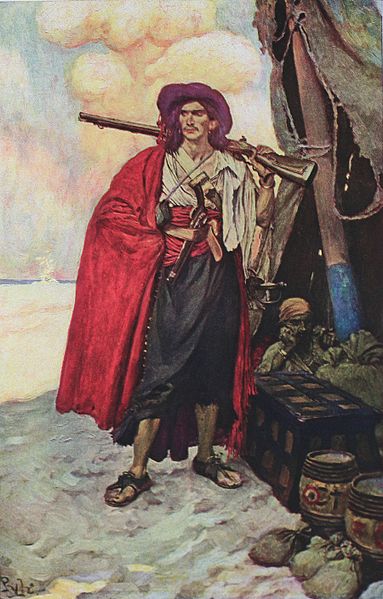
“B” is for “Buccaneer,” plus ARC Giveaway

No, not that kind. Though this one is rather handsome, in a Byronic way. And wasn’t Howard Pyle a marvelous illustrator?

I’m talking about this kind:

As immortalized in Edith Wharton’s last, unfinished novel, the Buccaneers were wealthy young American girls who, snubbed by Old New York society, made the transatlantic crossing to England in search of aristocratic husbands. Their beauty, determination, and money made them highly attractive to cash-strapped peers and ambitious young professionals. Between 1870 and 1910, the “Buccaneers” married into the ruling class, propping it up for at least one more generation.

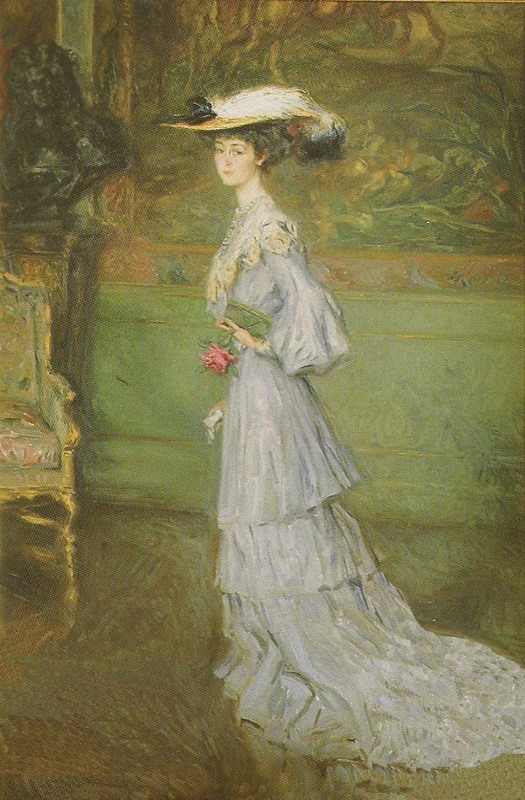
Arguably, the best-known of these was Consuelo Vanderbilt (above), groomed from childhood to marry a duke. Possessed of rare beauty, enormous wealth, and an ambitious and domineering mama, Consuelo married the ninth Duke of Marlborough in a lavish 1895 ceremony considered by many to be the wedding of the century.

Sadly, the marriage was not a success. After producing the requisite heir and spare, the Marlboroughs separated in 1906. Their marriage was later annulled so that Consuelo could remarry, this time for love. She eventually related her experiences as an English duchess in her memoir, The Glitter and the Gold.

Despite the unhappy outcome of many such matches, the transatlantic marriage market remains a fascinating phenomenon for authors and readers to study. My novel Waltz with a Stranger was influenced by it. And so was the hit TV series Downton Abbey, in which an English earl and his American countess eventually overcame their mercenary beginnings to form a true love match.

So, dear readers, do you know of other stories inspired by the transatlantic marriage market? And do you think such marriages were ultimately a good or bad thing for English society? Comment below for the chance to win an ARC of Waltz with a Stranger.

“A” is for “Animals”: The Alphabet Posts Begin, plus ARC Giveaway

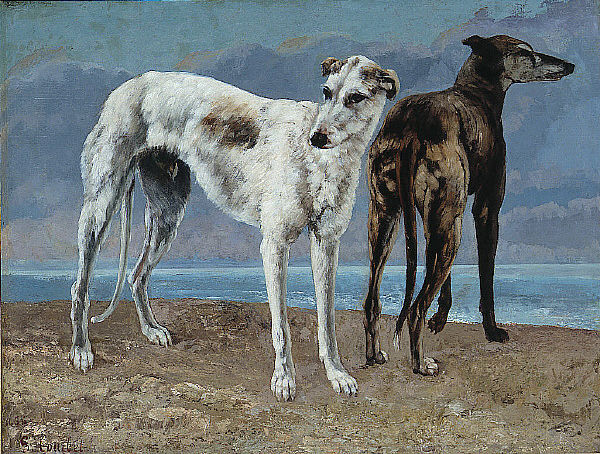
These two beauties–painted by Gustave Courbet–belonged to the Comte de Choiseul

What a difference almost two weeks makes! Since my last post, we’ve begun a new month, gained an hour each day, and reelected an incumbent president. So it seems like a fitting time to start something new on this blog, as well as continuing the ARC giveaway for Waltz with a Stranger.

Welcome to the Alphabet Posts, as I blog my way through topics–literary and otherwise–from A to Z. This week, it’s “A” for “Animals” . . . especially animals in romance fiction.

Those of us who have pets love them dearly, so naturally we warm to fictional characters who feel the same way about their own. And animals can add a touch of humor, charm, and warmth to a story, as well as illuminate the human characters whose lives they share. The sternest, dourest, most forbidding hero surely can’t be all bad if he has his devoted dog always at his heels, and the most spoiled, capricious beauty can show a softer, more nurturing side towards a cherished cat or pet bird.

As a reader, I’ve been charmed by various fictional pets. The cat Bastet who stalks regally through the Amelia Peabody Emerson mysteries, half-companion, half-caretaker to the Emersons’ adventure-prone son, Ramses. The Merrivilles’ big, sloppy dog, Lufra, in Georgette Heyer’s Frederica. Dodger, the kleptomaniac ferret who enlivens Lisa Kleypas’ Hathaway series. Grim, the talking Tower raven, in Deanna Raybourn’s Lady Julia Grey mysteries. The adorable Labrador trio of Bogart, Newman, and Peck in Nora Roberts’ The Search.

But my possible favorite might be Garrick, the shaggy mongrel who, along with his gamine mistress Demelza Carne, joins the slightly ramshackle household of impoverished Cornish mine owner Ross Poldark. Girl and dog change Poldark’s life forever, Demelza ultimately winning his stormy heart, and Garrick enlivening his existence simply by being Garrick.

At one point, a cash-strapped Ross wonders aloud what their impossible dog might be worth on the open market: “One overgrown mongrel. Carnivorous. Fights bulls and guards babies. Trained to sit on seedlings and scratch up flowers. Good crockery breaker. Suffers sometimes from bad breath. Results guaranteed.”

Not that Garrick has anything to worry about. He remains a fixture of the Poldark saga throughout the first seven books–before succumbing to old age “off-camera” before book eight.

So, dear readers, who are your favorite fictional pets? And did any of them inspire you to acquire a pet of your own?

The winner of this week’s ARC giveaway will be chosen from the commenters below.

Something Wicked This Way Comes–Free ARC Giveaway

These days it seems the world is full of scary things, the most recent being the super-storm that just slammed the East Coast.  I have relatives who can remember when the Hurricane of 1938 hit New York. Back then meteorologists had no idea what they were dealing with. And while technology and weather science has advanced greatly since then, the experience of living through a hurricane–and the “living through” part is the best case scenario–is as traumatic as ever. When it comes to instilling shock, awe, and abject terror, Nature pretty much trumps anything man-made.

Talking of which, today is Halloween. Under present circumstances, it might seem a bit . . . quaint to be scared of things like bats, witches, ghosts, and vampires. On the other hand, maybe a little make-believe scary is just what we need at times, to distract us from the all too real scary confronting us on television, the internet, or in newspaper headlines.

I loved Halloween as a child–dressing up as someone or something else, going trick or treating (and when you’re a little kid, yeah, it’s all about the candy), and the deliciously eerie experience of being out at night, often way past my bedtime, and seeing the neighborhood houses decorated for the occasion. Jack o’ lanterns, glowing skulls, tombstones on the lawns, cardboard cut-outs of witches, bats, and black cats in windows, ghostly shapes of white crepe paper hanging from the branches of trees. There was always at least one house on the block that went full out and got itself up as a haunted house, complete with flashing lights, spooky music, and recordings of thunder.

As an adult, I have a slightly different perspective on Halloween, especially after several years of dealing with kids hyped up on excitement and way too much sugar. Namely, I’m openly glad that they get to enjoy themselves for the night–and secretly relieved that Halloween doesn’t last longer. All the same, I retain a nostalgic fondness for the holiday–and for a touch of make-believe scary.

Personally, I prefer my scary laced with humor or whimsy. Straight-up horror just isn’t for me–if you ever managed to persuade me to see a horror film, I’d be the one peeking through my hands or getting up to use the bathroom or buy popcorn during the goriest parts. I don’t read Stephen King, who’s much too accomplished at what he does. The movie tie-in edition of Carrie, featuring a blood-drenched Sissy Spacek on the cover, was responsible for at least one nightmare when I was young and impressionable. Ditto for the cover of Frank DeFelitta’s reincarnation horror novel, Audrey Rose (it was the girl’s crazy eyes that creeped me out, seriously).

So when I want a taste of make-believe scary, I go for things like The Addams Family movies (Anjelica Huston and Raul Julia are Morticia and Gomez for me, and Christina Ricci is a pitch-perfect Wednesday). Or even Charles Addams’ original cartoons of the family. And for years It’s the Great Pumpkin, Charlie Brown was a viewing staple in our house. And the Chuck Jones adaptations of Kipling’s Jungle Book stories, while not seasonal, were wonderfully dark, atmospheric, and–in the case of Rikki-Tikki-Tavi–spine-tingling. Nag, Nagaina, and Krait were as frightening as any human villain–possibly more so. More recently, The Nightmare Before Christmas has become an occasional favorite, though one could argue indefinitely as to whether it should be considered a Halloween or a Christmas film.

When it comes to scary stories with humorous undertones, it’s hard to beat Washington Irving’s The Legend of Sleepy Hollow, which inspired the above painting by John Quidor (1858). And there was a collection of delightfully macabre poems, Shrieks at Midnight, that I would frequently check out from the library, even committing some of the poems to memory. Delightfully macabre also describes the poetry and illustrations of the late Edward Gorey (even his surname is perfect!).

So, dear readers–or anyone else who happens to be stopping by, what are some of your favorite things about Halloween? Do you prefer your scary straight-up or played for laughs? I’d be delighted to hear from you.

Moreover, from now until its release date in December, I will be giving away an ARC of my (non-scary!) debut novel Waltz with a Stranger on a weekly basis. This week’s winner will be randomly chosen from among the commenters on this post.

Happy Halloween!

The Name of the Thing: Choosing the Right Title

Song at Twilight CoverI look at the date of my last post, and then the date of this one with bemusement and a touch of guilt. Certainly, I never intended to go this long before updating. Time flies when you’re writing to a deadline. (Except when it crawls.)

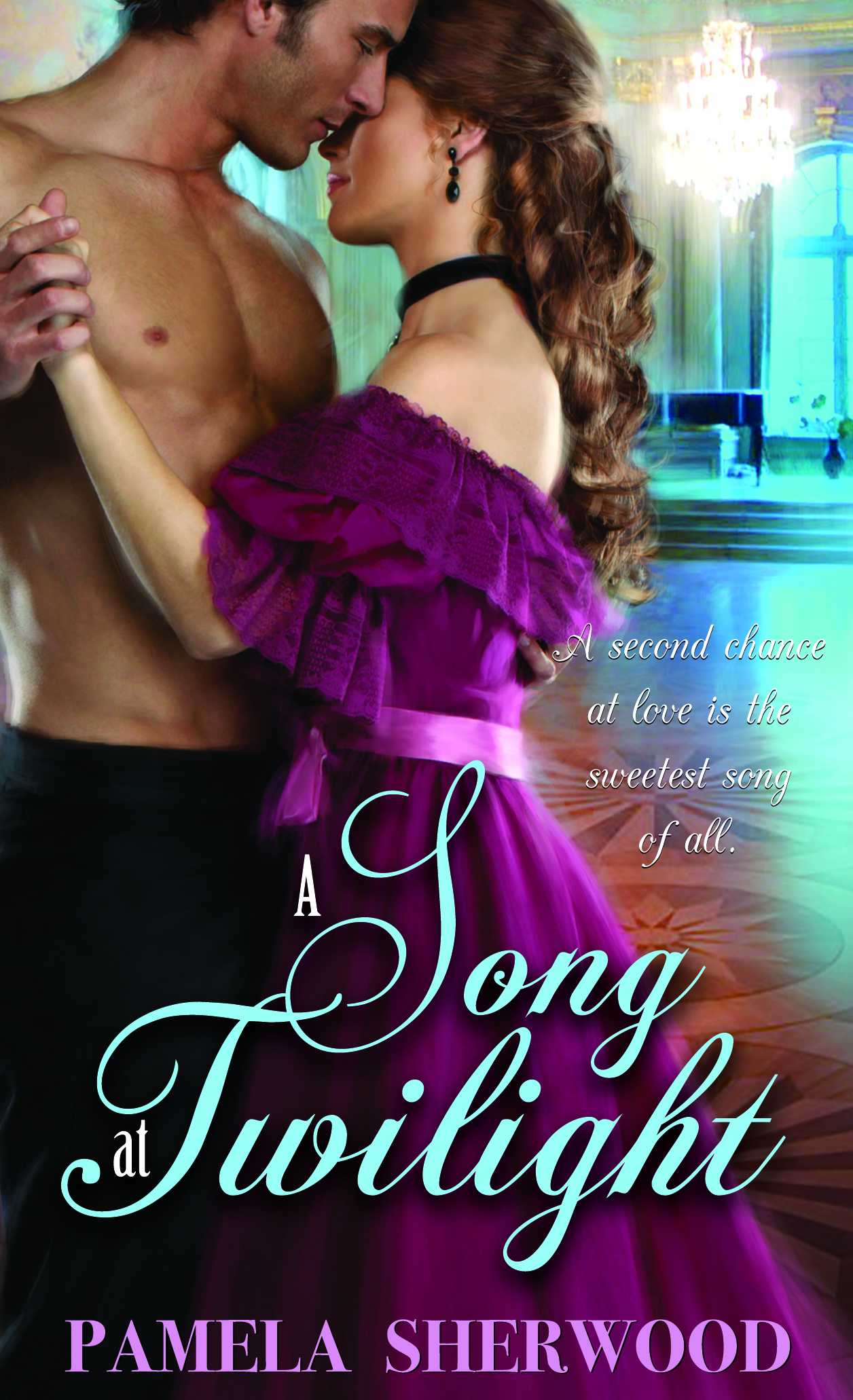
But tonight, with the book more than 80% complete, I feel I can break silence and share a few details. Like the cover. So, here’s a peek at my second book, A Song at Twilight, to be published sometime in 2013, more details–plot, characters, conflict, etc.–to follow.

Generally, authors don’t have much control over what ends up on the cover of their book. And I have to admit, I’m not a huge fan of what are commonly called “mantitty” covers, especially when the situation doesn’t seem conducive to shirtlessness. But this one is growing on me, and I like enough of the other details–the couple’s pose, the setting, the colors, the plot-appropriate piano in the background–to be tolerant of  Bare Chested Guy.

Titles are another aspect over which authors don’t always have the final say. It’s probably a good idea not to get too attached to the first one you pick, especially if your editor is less enthusiastic about it. And to generate a few back-up titles you can live with, if that turns out to be the case.  And sometimes the back-up title may turn out to be better or more appropriate that your original pick.

My original title for this book was Unforgotten Song. Not a bad title, but I was asked to come up with something perhaps more evocative and romantic. I got to keep the title of my first book, Waltz with a Stranger, the general consensus being that it was a perfect fit for the story, so I didn’t grumble much, if at all. It was fun, in a way, to brainstorm alternate possibilities and see what I could come up with. I knew I wanted to retain a connection between music and love, as the heroine was a professional singer and the story set in the music world. So out came the poetry anthologies, the opera librettos, and my trusty copy of Bartlett’s Familiar Quotations.

Ironically, none of those yielded the title I finally chose. That came along, unexpectedly, as I sat scribbling suggestions on a sheet of college rule and crooning tunelessly to myself, “Once in the dear, dead days beyond recall …”

The opening line from a popular Victorian parlor ballad, the kind of unabashedly sentimental song families warbled together as they gathered around the piano in the evening. Laura Ingalls’ Pa sang it one night as he played his fiddle in These Happy Golden Years. Christine Stuart sang it to Gilbert Blythe in Anne of Ingleside as Anne writhed with totally misplaced jealousy. The title “Love’s Old Sweet Song” was already on the list. On an impulse, I decided to check out the rest of the lyrics–and struck pay dirt with the chorus:

Just a song at twilight when the lights are low,

And the flickering shadows softly come and go,

Though the heart be weary, sad the day and long,

Still to us at twilight comes Love’s old song,

Comes Love’s old sweet song.

A Song at Twilight–dreamy, evocative, authentic to the period, and appropriate for the characters.  Who could ask for anything more? Fortunately, my editor loved it too, and gave it the green light.

I’d like to think the shades of Laura and Anne might also approve–as long as Christine Stuart wasn’t anywhere about!

So, readers, what titles have you found evocative or particularly well-suited? And writers, where do you find your inspiration for titles, and have you ever had to change one you were especially attached to?